Monday, April 16, 2012

The B-52 Turns 60: What IF? (Part 2)

(Part 1: 1946-47 Here)

B-52D at Edwards AFB Museum, Source: SMSgt Mac

Introduction:

It has been written that “What If?” is historian’s “favorite secret question”. Would the B-52 have become the venerable icon of airpower that it is ‘then’, if American communications and norms had been different?

What if’ 1946-1952 was anything like 2006-2012?
(All persons and institutions are fictional, Any resemblance of characters cited within to persons living or dead is pure serendipity ).

1948
Boeing Model 464-39, Source: Mandeles

The year 1948 began under a dark cloud for AMC’s B-52 program managers. Air Staff officers succeeded in canceling, not simply Boeing Model 464-29, but the entire Boeing heavy bomber program due to doubts about the B-52’s ability to achieve the required range and speed….
…Rapid progress on an acceptable heavy bomber design then was stalled in the early months of 1948 while Boeing president William M. Allen and AMC officers lobbied Air Force Secretary Symington and headquarters officers to reinstate Boeing’s contract. During this period, despite the cancellation, Boeing and AMC engineers continued their discussions and research on heavy bomber design. This activity led to the Boeing proposal for Model 464-35 after Symington and, Air Force Undersecretary Arthur S. Barrows reestablished the Boeing contract. While several compromises in military characteristics were made to give Model 464-35 a better chance of meeting Air Force needs (e.g., reduced required range), technical shortcomings in the fire control system, landing gear, engine nacelle design, and aircraft configuration still made achievement of military characteristics dubious. (Mandeles, Pg 49**)
Early 1948…

Brochure at Peacenik Objectors Gone Overboard (POGO) fundraising event for donors
“POGO’s investigations into the new troubled bomber program played key role in successfully bringing scrutiny that resulted in the program’s termination.”
Wheels’ Wincelow: Centre of Defense Disinformation (CDI) Press Release
‘Military Contractors Brazenly Lobby For Your Tax Dollars to Continue Failed Program. Bomber contractor Boeing Doesn’t take ‘no’ for an answer. That is why we find top Pentagon officials bombarded with inappropriate pressure from Boeing and ‘collaborators’ in the Air Material Command to reinstate Boeing’s failed bomber program.
Phil Sweetham (Aviation Leaks)
“Bomber program cancelled. See, I told you so. I saw this coming. I was right.  ”
Dave Axiom of Stranger Room
Controversial Bomber Cancelled Amid Controversy

Later in 1948…

Peacenik Objectors Gone Overboard (POGO) Brochure at Fundraising Event for Donors
Reinstated Bomber program highlights Collusion of Military and Industry. The two entities form an interwoven ‘complex’ that is no harmless cliché’. No, really! That's why your contributions to POGO are more important than ever! 
Wheels’ Wincelow: Centre of Defense Disinformation (CDI) Writing in ‘Babbleland’ column of Thyme Magazine
“Cozy Relationship Between Boeing and Air Force Revives Failed Bomber Program and Will Cost Taxpayers Dearly.
Phil Sweetham (Aviation Leaks)
Bomber program was cancelled. I told you so. I was right. I did see it coming. So what if it wasn’t the final decision, I was right on that one point. It WAS cancelled. I was right.
Dave Axiom of Stranger Room
Controversial Un-Cancelling of Controversial Bomber: Controversy Continues

1949

Boeing Model 464-35, Source: Mandeles
Within the Air Force, secrecy concerning the stockpile and technical characteristics of the weapons complicated the design of a nuclear-capable force. The Air Force wanted light weapons, but the Atomic Energy Commission (AEC) did not release specific information about weight. Hence, the B-52 bomb bay design remained open throughout 1948 to provide for the possibility of a 15,000-pound bomb instead of a 10,000-pound bomb. The design bomb weight was not reduced to 10,000 pounds officially until mid-January 1949. In the meantime, the additional 5,000 pounds reduced the B-52’s projected range and raised the possibility of costly changes in bomb bay configuration. (Mandeles, Pg 37-38**)

Dave Axiom, Stranger Room columnist, ‘Mired’ magazine 'Controversial Bomber Cheats: Meets Controversial Specifications'.
Sure, the revived new bomber can carry the payload it needs to carry, but it can’t carry what it WAS expected to carry, before the Air Force knew what it was going to HAVE to carry – which it turns out to be what it CAN carry. Bummer. I still think that’s cheating.
Peacenik Objectors Gone Overboard (POGO) Press Release
Department of Defense fudges requirements numbers to get new Bomber to meet specifications so they can reinstate a failed program. This over-the-top development only represents tip of the iceberg that reaches down into the depths of depraved corruption that runs throughout the Department. We will have many other mixed metaphors to be revealed from POGO’s ongoing investigation, as soon as we can find someone depressed enough to be willing to talk to us.
‘Wheels’ Wincelow: Centre of Defense Disinformation (CDI) 1949 Press Release
Payload ‘Death Spiral’ Only by Making the Payload Smaller can Air Force Get Its New Bomber Over the Target. CDI believes the Air Force should pause their design effort until their bomber can carry 5000 more pounds of dead weight to meet original specifications. It’s a Death Spiral we say!You know things are bad because we capitalized ‘Death Spiral’.
Phil Sweetham (Aviation Leaks)
You know, everyone is talking about this current weight/payload weight thing, and I know that is has been the standard measure by which weight has been traditionally been viewed while systems are in development, but that's a ruse to keep the public off the scent of the real issue: mature system weight, I want to highlight that at the current rate of weight growth this bomber will weigh a gazillion pounds by 1952 if the current trend continues. I'm sure that is a bad thing. So bad that it will dog the program until it's cancelled...again. Soon I bet.
Boeing Model 464-40, Source: Mandeles
Boeing Model 464-49, Created Oct 1948, Adopted 1949, Source: Mandeles


Part 3 


Sunday, April 15, 2012

The B-52 Turns 60: What IF?

As the “BUFF” enters a long planned twilight, how might things played out if the era had been different?

B-52D on Display at Dyess AFB (SMSgt Mac Photo)
The B-52 is a beautiful over-engineered-by-slide-rule beast first flown on April 15, 1952 that has now flown for 60 years. The newest airframe is now over 50 years old. The 50+ operational life of the B-52 began with it being a high altitude penetrating bomber, painfully transitioning to a low altitude penetrating bomber, and then finally to its current primary role as a standoff weapons launch platform.
    

The Value of History: Perspective


Novices in mathematics, science, or engineering are forever demanding infallible, universal, mechanical methods for solving problems. -J. R. Pierce

It has been written that “What If?” is historian’s “favorite secret question”. Would the B-52 have become the venerable icon of airpower that it is ‘then’, if American communications and norms had been different?

What if’ 1946-1952 was anything like 2006-2012?
(All persons and institutions are fictional, Any resemblance of characters cited within to persons living or dead is pure serendipity ).

1946

Boeing Model 462, Source: Mandeles
The tremendous growth of the Air Corps during World War II created a plethora of offices with overlapping concerns-the organizational conditions for the establishment of a multiorganizational system that ultimately influenced the postwar formulation of operational requirements for jet-propelled strategic bombers. Peacetime, however, brought large cuts in personnel, budget, and orders to aircraft manufacturers and-against the background of great uncertainty and strife in the defense establishment-many doubts surfaced during the first 13 months of the new heavy bomber program. The first bomber configuration, Model 462, was accepted in mid-1946. Within three months, this version was subjected to much criticism by the Air Staff. Boeing proposed an entirely different configuration, Model 464, to answer Air Staff doubts. Over the course of several years, the profusion of offices having overlapping functions regarding the development of new aircraft promoted a useful pattern of proposal, criticism, and change. (Mandeles, Pg 48**)

**Page numbers: electronic version online
Boeing Model 464-17, Source: Mandeles
‘Wheels’ Wincelow, "Pentagon Waste Proliferates in Bureaucratic Redundancy", Centre of Defense Disinformation (CDI) 1946 Press Release:
The War Department’s latest folly involves not one, not two, but THREE new and unnecessary bomber programs. By far the worst of the three has to be the new and as yet undefined ‘Heavy Bomber’ program. Already it is reported that the first design attempt has failed and the contractor has happily gone back to the drawing board no doubt with more of the public’s money in its pockets. The conflicted decision and review process of this program is being carried out through a bloated, redundant, and ponderous bureaucracy that will no doubt generate tremendous waste of the taxpayer’s dollars in an effort doomed to fail under the weight of its own inertia.
Peacenik Objectors Gone Overboard (POGO) Testimony before the House Whines and Memes Committee:
In this time of hard-won peace and enduring economic uncertainty, the United States enjoys primacy as the world’s exclusive nuclear power, the United States should not be pursuing another long range bomber aircraft and should scrap development of the overly complex and expensive medium and heavy bombers now in development. We strongly recommend substituting more B-29s and the new B-50s for half of planned buys of the recently announced B-47 and ongoing B-36 development programs and cancelling the rest, and to cease the wasteful development of these unnecessary and unproven weapons technology. With a planned total buy in excess of 2000 aircraft, these bomber programs are among the Department of War’s largest weapon procurement efforts and will (for a decade or more) drain the Treasury of funds needed to strengthen peaceful international relations and pay for domestic programs . This option would buy half as many simpler, cheaper aircraft, purchasing instead more of the current generation of bombers at a fraction of the cost to develop, field and support the new gold-plated aircraft with all their extraneous bells and whistles. The rationale for this change would be that DOD does not need even more new bombers as the new B-50, an advanced development of the B-29 that has yet to fly. This option might also allow the War Department to upgrade their bomber fleets faster than possible with the newer unproven aircraft designs which will undoubtedly experience delays related to additional technical problems driven by their unnecessary complexity.
Phil Sweetham (Aviation Leaks):
"This new bomber program is in trouble already and it hasn’t even been active two years. Will it EVER be fielded?"  
 Dave Axiom Headline ('Stranger Room' Column, 'Mired' Magazine):
‘Controversial’ New Bomber Controversially Struggles Early in Controversy,
 Title of General Accountants Office Report:
"New Bomber’s Unstable Design and Concurrency Creates Excessive Risk"

1947

Yet, Air Materiel Command constituted a useful “redundancy of calculation” for the assistant chiefs, and functioned as an element of a nascent multiorganizational system. AMC staff often criticized the bas[i]s and assumptions of headquarters’ B-52 decisions. A June 1947 memorandum from the Aircraft Laboratory argued that AC / AS staff (1) misunderstood the relation between military requirements and aircraft size, (2) misunderstood how difficult it would be to design an aircraft capable of 5,000-mile radius, (3) did not appreciate how well balanced the B-52 design was, and (4) misunderstood how technical setbacks should be expected but could be solved in later versions of the aircraft. In July AMC’s Maj Gen Laurence C. Craigie, arguing on the basis of technical studies conducted in the Engineering Division, suggested that AC / AS officers should refrain from proposing either the all-wing or delta wing as alternatives to the B-52. He emphasized, in response to misgivings about B-52 range, that design deficiencies could be rectified in the aircraft’s life cycle. (Mandeles, Pg 47**)

‘Wheels’ Wincelow: Pursuit of Unobtainable ‘Perfect’ Bomber Solution Highlights Complexity Problems, Centre of Defense Disinformation (CDI) 1947 Press Release:
"Well here it is a year later and one design attempt after another has fallen barren. The bloated bureaucracy inherited by the new Air Force continues to generate tremendous waste of the taxpayer’s dollars through incompetence and inefficiency chasing unnecessarily complex weapon systems. It is still a program destined for certain failure."
Dave Axiom of Stranger Room (while trying to look really, really, serious) :
New Controversial Bomber Still Controversially Struggles in Ongoing Controversy: “They’re claiming their new designs meet specifications but are having to cheat by changing the specifications. Those cheating cheaters!” 
 Peacenik Objectors Gone Overboard (POGO) 1947 Press Release:
Pentagon suppressing dissent in ranks over New Bomber Designs:  "Scandal grows as faults and failures in design process and poor management are being covered up by the new Air Force’s leadership". POGO calls for Congressional investigations
 From Gonzo Accounting Office (GAO) 1947 Report: “New Bomber’s Unstable Design, Division of Effort and Concurrency Creates Excessive Risk”:
To summarize, the Army Air Force’s focus, needed to ensure that this program will succeed appears to be hampered by priorities given to the current Department of War reorganization plans. It is doubtful that the many parallel bomber programs now in varying stages of development will allow sufficient attention will be given to this new bomber program. The GAO recommends termination of this program and the newly-organized Department of Defense should seriously reconsider current plans and delay fielding the current programs of record until the threat driving the need for the B-36 emerges and until the technology for the B-47 is considerably more mature.
 Phil Sweetham (Aviation Leaks):
The newly created Air Force has been no more able to nail down exactly what this fancy new bomber of theirs is expected to do (or what it will even look like) than their Army Air Force progenitors. Whatever plans these new ‘princes’ of the sky have for their new toy must solidify before they can proceed, and there is no indication of any set plan materializing as of this writing. One must also wonder about how much additional cost is buried in the Air Force’s plans to fix inherent “design deficiencies” that will “be rectified in the aircraft’s life cycle”. The probability of this program coming to fruition is becoming even more unlikely and surely increased Congressional scrutiny must be imminent.
 Part 2 (1948-1949)

Tuesday, April 10, 2012

Model 1894 Swedish Mauser Project

Resurrection NOT Restoration

I've pretty much completed the AR project. That is to say, it is about as 'complete' as I can ever call it same (except for optics -maybe next week). This means I've got time to start resurrecting Grandma's elk rifle: a 1906 issue of the M94 Swedish Mauser Carbine. I decided to get all the hardware in hand before I specify a 'sporter' stock for it because I didn't want to lay out the cash for what I wanted, only to find out I didn't have a working action to put in it.

Untouched... since about 1960 

The rifle has not been updated since Granddad built it around 1960, when Mausers were like AK clones are today. Yesterday I received in the mail a new (really!) trigger guard with catch release and a new (really!) floor plate that I ordered last week. I'm pretty sure they are from later Swede models as they are interchangeable among the 'small ring' Mausers and the later models are more available, but they are 'new' -- the floorplate was still in preservative from sometime before the 1940s. Markings for the new parts are also appropriate for a Swede, but as you see in the photo below, I had to give up hope of maintaining matching numbers because Granddad ground down the part of the trigger guard with the floorplate latch and serial number on it when he cut down the magazine walls. I acquired the floorplate in case I needed it, but I will be able to keep the original
Close examination, reflections on my late-Father's stories about the weapon and my knowledge of Granddad tells me that he probably never had the original rifle - just the complete action. An ultimately pragmatic man, I doubt cutting down a rifle by sectioning the 'lower' and the trigger would have occurred to Granddad if it had come with usable furniture.  I suspect the stock that was on it when I was given the rifle began life as a stock for a .22 caliber rifle that he already had in hand. Add the fact that he was building it for Grandma, a petite woman, and the mix of factors probably triggered the idea in him to cut it down.

The Family and the Swede

This rifle was built 'as is' for one thing: So a small woman could lug a high power rifle all over Eastern Oregon to take Wapiti. Granddad was also on the smaller side, so I think that's why it became his favorite over time as well. It was always referred to as "Grandma's Elk Gun", but Granddad probably used it more by virtue of the fact he went hunting quite a bit without Grandma and Grandma never went hunting without him. It was hunted with almost every year for twenty-five years, and it took elk (usually two or more) more years than not-- and Mule Deer from time to time as well. Upon Granddad's death (at 91 in 1991), his rifle passed to my Father, who passed it to me. I took it hunting once about three years ago, but didn't see anything suitable for taking.

The Swede's Needs

Taking the Swede into the field did give me some insight into what I might have to do to make it a solid hunting rifle again, and one that was perhaps tailored to Texas hunting conditions. First, the Swede shoots flatter than my .30-06 out to at least 200 yds and I suspect farther.  I found out that the original scope simply did not have enough light gathering capability, so a new one will be in order. Practice firing it immediately told me the gun was too powerful for the stock. Though it has an excellent (and substantial) recoil pad, my first thought after shooting it just once was: "Dang! I thought Grandpa liked Grandma!"

The 6.5 x 55 is a lot of round to mount on an itty-bitty stock. It fits in nicely in a crowd of larger calibers. The round puts lots of powder behind a long narrow projectile spun up to high stability .
Source: Wikipedia
The 6.5 x 55 Swedish is second from the right in the picture above, between the .308 (far right) and the 8 x 57 Mauser (third from right)

Baby Steps Ahead

After test fitting the 'new' lower and 'old' floorplate, and keeping the same follower and follower spring, last night I ordered new fore and aft guard screws (old ones were 'cut down') and a new military trigger. I really like the standard two stage trigger of the Swede and as long as the mechanism behind the lever is sturdy (it is) I see no reason to go to an aftermarket trigger. After I get these parts I'll decide upon a low-profile safety: the current one is an original modified 50+ years ago by Granddad to 'work around' a scope and it looks like it needs more metal to keep it from cracking off at the wrong time and I already don't like the way it feels now.

No 'Bubbas' in These Parts

Granddad was an outdoorsman his whole life, and we were raised with the now somewhat quaint idea that firearms were weapons and 'weapons = tools' --- Tools that were to be used and not merely conversation pieces fondled every so often. In preparing to resurrect the family treasure (for that is all it will ever be -- Granddad engraved "Mc" on the receiver and barrel) I did enough research to discover there is a whole corner of the virtual world filled with keyboard commandos who denigrate anyone who builds a Mauser, especially the rarer of the type such as the 1894 Swede, in any other configuration than 'restored'. They often refer to treatment of weapons in other than their 'approved' manner as being 'Bubba'd". 

They can pound sand.

If they believe vintage Mausers should be restored perhaps they should buy them all and restore the weapons themselves. Their opinions of what others do with their property is of no consequence. This rifle was, IMHO not a prime example of type when Granddad probably rescued it from the scrap pile. It has now been a functional no-frills hunting rifle most of its life. THAT is the heritage of this weapon that I intend to faithfully honor. (Well, maybe a 'frill' or two).


Sunday, April 08, 2012

File under: “For He So Loved the World”

Sustained by Faith...


This is totally ripped off from my favorite Photostream and posted here because it deserves better commentary (which would include ‘none’) than the comment it got out right out of the gate from some crass 'Putz' at the source.   (original size)

Happy Easter to all

About the First F-35 Night Aerial Refueling

No, Not “Twilight”. Night

There are apparently 'those' who  think that  the F-35’s first nighttime aerial refueling tests beginning right about sundown (at altitude, which means well after sundown on the ground) is some form of ‘cheating’ or possibly a ‘diluted’ or ‘easier’ test than if begun perhaps long after the day’s last light has passed.  I came to this conclusion the first time someone posted the single-word ‘Twilight’ as a comment on a thread about the testing. I found it mildly amusing at the time because of the self-revelatory ignorance behind the squeaking is now archived forever in cyberspace. If someone holding incorrect and ill-informed views wants to lynch their own credibility, I’ll happily give them all the rope they’ll need.
 
Given that the material presented in the first article only provided a photo taken early in the mission, we can conclude that the commenter either: a) didn’t bother to read the part about the mission being 3 hours long or b) isn’t aware that twilight doesn’t last very long no matter what your altitude.  Checking my phone app for moon and sun position tracking I found that the date of the test, March 22nd also involved –as I suspected-- a ‘New Moon’ (i.e. NO moonlight).  Therefore a test beginning at ‘Twilight’ had to have rapidly transitioned into ‘Dark*’ pretty quickly.

But what are we to make of the same commenter again dropping off ‘Twilight’ on yet another major Defense/Aerospace website? This time to a posting with a video showing different sortie activity over the length of the mission, including a ‘hookup’ clearly made well after dark?

*As dark as the lights of SoCal would have permitted, but that presents its own challenges.
Screen Capture of F-35 pulling off the Boom
It will be interesting to see if the same actor drops the ‘Twilight’ turd elsewhere.

Striking, isn’t it? That someone has ‘bet the farm’ on his beliefs to the point that they feel they don’t even have to read what they’re commenting upon. I hope they have another farm to fall back on.  

Post Script:

I was sorely tempted to also bore most of you to tears on Flight Physiology and WHY starting a test card for night refueling qualification testing at dusk could yield more data, and more meaningful test data than starting well after dark, but I managed to restrain myself.
Here’s the ‘short form’ of the more important aspects: Transition from Photopic to Scotopic vision and the effects of changing lighting conditions on aircrew perceptions (Boomer and Pilot) of contrast, glare, reflection and refraction. You know, the kind of stuff you care about when you are qualification testing the night aerial refueling capability of the F-35 (and tanker type to refuel the F-35)    

Friday, March 30, 2012

The F-35 and Pining For Simpler Times...That Weren’t

Edmonton Journal Fabulist Pens Unattributed Perversion of History to Pursue a Fatally Flawed Analogy – Misses Obviously Relevant Ones
Begging once again the question: Who the f#@* believes what is in the papers anymore?
My Spitfire
Minor Updates 31 March to add graphics, links and improved accuracy or readability

I almost passed on dissecting and documenting the Edmonton Journal’s drivel.. except, well… it’s just such a perfect example of the kind of pap the media pushes out in the public eye on technology topics in general and defense topics in particular. Mea Culpa I guess – I’m compelled to mentally capture the moment whenever the press just ‘phones it in’. Add to the mix a rushing-in to do so for the promotion of an obvious agenda either expecting or hoping no one will notice before the news cycle turns over? Well that just begs a smackdown.

I’m tempted to ‘begin at the beginning’ and do a complete ‘Fisking’ through to the end while disassembling this execrable output from the ‘Anemic Anonymous Aesop(s) of Edmonton’, but that would require me to put FAR more work into the effort of shaming the perpetrator(s) than I’m willing to, or have time to, put into the effort – and obviously many times more effort than they put into the original fable to begin with. Instead I’ve organized this simple, but lengthy critique to eviscerate the editorial’s lynchpin assertions.

The Edmonton Journal Describes a “Spitfire That Never Was”
In an effort to frame his analogy between the Supermarine Spitfire and the F-35 Joint Strike Fighter, the (understandably) unnamed ‘editorialist(s)’ asserts more than a few ‘facts’ concerning the Spitfire that aren’t facts at all. Begin with this paragraph (emphasis mine):
Consider the history of the Second World War's Spitfire. Design began in 1931, an initial contract for 310 was issued by the British government in 1936, the first prototype flew the same years, by 1940 they were rolling off the line at one factory at a rate of almost 60 planes a week, and in 1948 - slightly more than 20,000 aircraft of various version having been produced - the Spitfire went out of production. Price varied, of course, but in 1939 one contract put the sticker at £12,600, or roughly $850,000 in today's terms.  
Think about that: in 17 years the Spitfire went from birth to out of production, for a total cost in the range of $17-$20 billion. And it helped win a world war in the meantime.
Compare that with the F-35. As it happens, 17 years has already passed since the first development contract was signed, the cost to the U.S. alone is already estimated at $325 billion,...
We’ll take on the highlighted claims in order. Some of them are fabrications, some are worse: half-truths and over simplifications presented without sufficient information to attain a proper perspective. Collectively, the above passage highlights how the entire editorial is factually poor, analytically weak, and analogically inept.

Design of the Spitfire Began in 1933, NOT 1931
Design of a Supermarine aircraft first referred to (internally by Supermarine) as a ‘Spitfire’ began in 1931, but it wasn’t THE legendary Spitfire. It was the monoplane design Supermarine 224, designed to compete for fulfillment of Britain’s F.7/30 requirement. It looked like this:

Supermarine Type 224
The design above was not selected and the Gloster Gladiator won the design competition. If the 224 design had been selected, it would have been just as obsolete as the Gladiator was before WW2 even began. 
The First Spitfire: Type 300 (Prototype K5054)

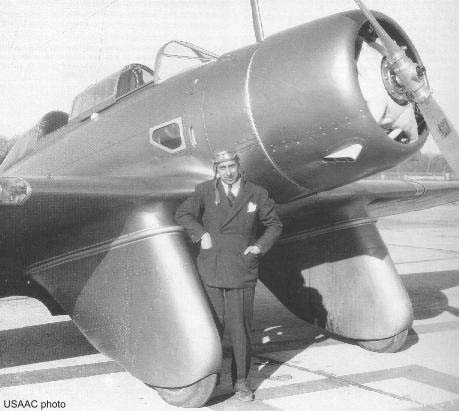
It was in 1933 that R.J. Mitchell, the Spitfire’s designer, began radically revising (to the point of being completely different) his earlier drawings. Engine/cooling ideas and metal structure design insights from the earlier effort were brought forward, but the wing, landing gear and fuselage were all different. Supermarine evolved this design on their own until in December 194333 (typo), when the Air Ministry placed an order for Supermarine to build one prototype. A year later in December 1934, Mitchell decided to modify the plane design to accept what would become famous as the Rolls-Royce ‘Merlin’ Engine. With that decision, almost all the critical elements of what would become the original Spitfire, aka the Type 300, would be brought together. By a very long stretch of the definition of when the design was ‘begun’ I suppose one could choose 1931, but that would require more stretching than would be required to say the Seversky P-35 was ‘begun’ when the SEV-3 design was first penned.
Seversky SEV-3
Seversky P-35

The use of 1931 is understandable only if the author had no knowledge of how the aircraft design came about and ignorance as to how Mitchell employed the ‘Type’ designation in the design documentation. It is NOT excusable to use 1931 to create a sham ‘parallel’ to a factoid concerning the F-35 in attempting to fabricate one-half of a faux cosmic ‘irony’ (the other half is the F-35 timeline addressed below). The Type 300 design was made real in what we know as the first Spitfire: the prototype ‘K5054’, built to meet special specification (F.37/34) and already incorporating aspects of an even more advanced specification being drafted at the time (F.10/35).

1940 Spitfire delivery rates 60 per week ….NOT!
The editorialist(s) obviously either don’t understand the difference between being contracted to deliver and actually delivering. Or maybe they didn’t even bother to read Wikipedia -- or if they did, they missed the important bits:
By May 1940, Castle Bromwich had not yet built its first Spitfire, in spite of promises that the factory would be producing 60 per week starting in April. On 17 May Lord Beaverbrook, Minister of Aircraft Production, telephoned Lord Nuffield and manoeuvered him into handing over control of the Castle Bromwich plant to Beaverbook's Ministry. Beaverbrook immediately sent in experienced management staff and experienced workers from Supermarine and gave over control of the factory to Vickers-Armstrong. Although it would take some time to resolve the problems, in June 1940, 10 Mk IIs were built; 23 rolled out in July, 37 in August, and 56 in September.
Castle Bromwich eventually would produce the overwhelming majority of Spitfires compared to any other site, but in 1940 it was still getting up to speed. Including production at the original facilities, the highest average weekly production rate of production seen in 1940 came in November:
Bringing up the Spitfire rate of production is some particularly delicious irony. The editorialist’s whole point seems to be “Hey! Spitfires were produced on the QT, What’s wrong with the F-35?” It will be informative to run with this topic a little and note what the differences are between the Spitfire and F-35 production ramp ups as case studies.
I’m in the (very large) camp that believes that in general the delays happened for a combination of reasons, most fell under the responsibility of the contractor, some not. The project was enormous in scale and the contractor relatively small. Production demands required a large outsourcing of work that involved (for that time) advanced complex, and specialized skills, processes and materials. One source notes that expeditiously redrawn engineering source drawings for subcontractors at first induced and then promoted the proliferation of errors. Coordination of the logistics to ensure materials were where they were needed and when they were needed was a task beyond the original contractor management team’s ability. In any case, it took the earnest efforts of both industry and government to get the initial order of 310 Spitfires fulfilled in time to make them available for the looming war.

Spitfire Schedule Slippage and Overruns
The contract for the first 310 aircraft would in the end deliver a few numbers shy of that figure about 8 ½ months (~30%) behind schedule and at higher unit cost (~18-19%). Given the scale of the project and then-advanced construction and metal-working methods involved, this was still a remarkable achievement. As noted above, the ‘shadow factory’ at Bromwich was also late coming on line producing (at first) the evolved Spitfire Mark IIs. Do we need to wonder why the Aesop of Edmonton didn’t mention the cost overrun-late schedule part of the early Spitfire history? There are only two reasons possible, ignorance (by far the most likely) and convenience: either one is pathetically unprofessional in its own way. By ‘unprofessional’ however, I do not mean at all ‘unexpected’.
The F-35’s production rate increases have been delayed by ‘customer’ decisions based upon a variety of reasons asserted (valid or not). The F-35’s contractors have consistently sought to ramp up production as rapidly as possible. Contrast the F-35 situation with that of the Spitfire’s, where the production ramp up was highly ‘encouraged’--without early success-- by the customer.

Spitfire Production Ends in 1948?
We’ll allow the claim that the Spitfire was in production through 1948, but qualification and clarification is required concerning the ‘relevance’ of production after 1945.
The editorialist is apparently omitting the Seafire variant of the theme based upon the use of the ‘slightly more than 20000’ production claim (Seafire production ended in early 1949). If so, then the last of the Mk22/24 Spitfires rolled off the assembly line ‘barely’ in 1948 - on February 24th. However, production between 1945 and 1948 served to keep the industrial base intact more than anything else until Supermarine’s (1944) jet project could get going.
From what I can extract from the records found in Spitfire: The History (pp486-482), there were ~204 Mk 22/24s built between April 1946 until the end of production 22 months later representing about 1% of the Spitfires built. This means the postwar average weekly production was about 90% lower than even the lowest production rate seen in 1940 (shown above). Between 1945 and 1948, the RAF was disposing/selling-off Spitfires due to obsolescence faster than they were being built. This meant many of the post 1945 aircraft never even saw service with the UK or any of the other Commonwealth countries. For example, one Spitfire (PK713) built in 1946 was flown once, modified once, and then put in storage until it was sold for scrap in 1956. It was not alone in this fate. Touting production run length is fine, as long as we realize the relevance of the statistic. In this case, I’d say it was ‘not much’.

A Spitfire ‘Costs’ WHAT in today's terms?
Try about $ 4.5 Million US…EACH
The assertion that £12,600 in 1939 is “roughly $850,000 in today's terms” is a curious one, as I can find no reliable inflation adjustment/currency conversion combination (US or CDN) and proper approach that comes any closer to than those figures shown in the table that follows, but simply the order of magnitude of the claim indicates the editorialist(s) committed a classic mistake made by non-professionals: They used the wrong calculation (probably CPI/ ‘Basket of Goods’).
1939-Present  CPI Value Adjustment
For the purposes of this comparison, using the “GDP Share” calculation approach IS appropriate, and for the same reasons that we speak of defense spending in general in terms of GDP percentages. We are interested in how important the Spitfire and F-35 is/are relative to the country economies involved. As noted at the excellent resource MeasuringWorth.com


In the past less material and labor existed that could be applied to all projects. So to measure the importance of this project (compares to other projects) use the share of GDP indicator.
Measuring Worth follows up with a good example of the point made:
In 1931, the Empire State building, a giant of a structure in its day, was built at a cost of $41 million. This may seem inexpensive in today's terms when we compare its cost using the GDP deflator and determine a contemporary cost of $491 million. As a share of the economy, however, an amount of $7.6 billion in 2009 dollars would be the number to use, showing how important this building was in its day.
If we’re trying to understand how economically important the Spitfire was in the economy of 1939 and compare that to the same for the F-35 today, and using the VERY** conservative figure of £12,600 (in 1939) the Spitfire would cost £3,110,000.00 in 2010 (latest year data available at Measuring Worth). 

**The engine and airframe costs alone for the last Spitfires were ~30% higher than the earliest models. Add to that the increased complexity of the control systems as higher speed models required power boosting and there was a lot more ‘content’ and cost in the last Spitfires.

Last of the Spitfires: The Mk24
Using the above 2010 GDP Share value and the June 2010 UK-US exchange rate of 1 = 1.4566 we get the USD value of $4,526,916 in June 2010 dollars.
1939-Present GDP Share Value Adjustment
I submit, that given the relative differences in actual and expected effective operational life expectancy as well as actual technical content and capabilities embodied within both weapon systems, and even if using the highest projected F-35 unit cost estimates, that the F-35 is easily “worth” the difference.
 
Now, about that ‘total cost’ for the Spitfire... “$17-$20 billion”?
They obviously got the lower number by simply multiplying the 20,000 Spitfires times their incorrectly applied inflation adjusted number of $850,000 (20,000 x $850,000 = $17B) . The correct low number of the range in today’s dollars using the appropriate calculations is ~$90.54B! Would it be putting too fine a point on things for me to note that the Edmonton’s estimate is only about*** ‘82% off’ on the LOW side?

***I’m using the ‘about’ and approximate numbers because it is not at all clear whether the Journal is speaking of Canadian or US dollars but either one would yield roughly the same magnitude.

Edmonton Journal: Spitfire Apples < F-35 Oranges
The second Cardinal Sin in the Edmonton Journal’s cost accounting has to be what occurs when they then compare the under-estimated Spitfire ‘costs’ with the improper AND inflated (not to mention estimated and not yet ‘true’)“$325B” figure claimed as being the F-35 ‘cost’. The $325B number that is bandied about comes from the Air Force (see here) and Navy (pgs 129 & 143) Feb 2012 budget books (see USAF and USN ‘P-40’ Exhibits). Phrasing the assertion “cost to the U.S. alone is already estimated at $325 billion” carries the implication that there is some consensus on the basis for the ‘estimate’--there isn’t—but also leads one to believe the same accounting basis applies to the F-35 numbers as to the Spitfire’s when it doesn’t. The $325B ‘estimate’ includes ALL F-35 costs. The Spitfire’s numbers do not, and there is no way I am aware of to recreate what the missing Spitfire costs actually were. But we can get an idea from observing that the Castle Bromwich factory cost the British government £7M to put in place (BTW: Interesting article used as the source of the £7M figure) . Converting that number from 1939 currency to 2010 and we find it was the equivalent to £1.7B, or (using the June 2010 exchange rate as above) about $2.5B US just to build the factory that built just over half of all Spitfires. What other ‘Billions’ in Spitfire costs are unaccounted for?
 
The Edmonton Journal’s ‘17 Year’ Straw man Fails in the F-35’s Case As Well
As we have shown that the Spitfire went fewer than 17 years between fielding and production end/obsolescence, so too it can be shown that the F-35 has not been in development for ‘17 years’. No doubt the Journal used the start date of the award to Boeing and Lockheed to build the X-32 and X-35 Technology Demonstrators in late 1996. Unlike the generation-earlier Lightweight Fighter Competition that produced the YF-16 and YF-17, prototypes for what would become the F-16A/B and F/A-18A/B, the X-32 and X-35 were pursued to ensure the critical technologies were sufficiently matured prior to the pursuit of the actual combat aircraft program. That the X-35 demonstrated greater technical maturity was the key to Lockheed Martin being selected to build the F-35. That the X-32’s technology was NOT as mature, to the point that Boeing discovered in the building and flying of the X-32 that their fundamental manufacturing processes and aircraft design would have to be radically changed if their technology was to be subsequently fielded in a combat aircraft, illustrates the reasons for the X-plane designations for both aircraft far better than the X-35 basic design that did not need such radical changes.
The award of the contract to design and build the F-35 in SDD marks the proper start date to use in defining the F-35 timeline for comparison to the Spitfire. That start date was October 26, 2001, when the SDD contracts were awarded to Lockheed and Pratt and Whitney. For the mathematically challenged in journalism, that was about 10.5 years and not 17 years ago.

Additional Data: Preliminary Design Review (PDR) for the F-35 program was in April of 2003, and the Critical Design Reviews (CDRs) were held for the F-35A and F-35B were in February 2006. Given the configuration changes between the first aircraft assembled and the post-weight reduction aircraft and the timing of the design reviews, this makes AA-1 (the first F-35A to fly in December of 2006) a de facto ‘prototype’. 

Finally
“And it helped win a world war in the meantime”…
That snarky little throwaway line is precious. As noted above, the editorialist(s) selectively sidestepped the reasons the Spitfire was in the position it was to be developed and produced for a very long time (in the WW2 sense). It’s longevity, and rightful place in history is owed to the twin facts of:
  • The design was most suitable for adaptation to the changing battlespace (higher and faster as the war progressed)
  • The urgency for planes was seen before the actual need materialized.
These are more important points than its famous record in the Battles of France and Britain (where the Hurricane was the workhorse).

Now I ask the reader: If there was a global conflagration expected in the next 24 months, would there be any doubt that we would be pushing the F-35s into the hands of the aircrews in a manner similar to Britain in the run up to WWII?

No.

Sunday, March 25, 2012

Cost Cutting Via Retirement of CG-47 Class Cruisers

Or is it to advance the future of the fleet as well?
It was recently announced that the Navy would retire 7 cruisers of the Ticonderoga (CG-47) class. I'm not so certain this is bad news, depending on what outcome the Navy is playing for in their 'long-game'.
Since the retirement of the earlier generations of Navy cruisers, the biggest difference between destroyers and cruisers has been what the Navy has decided to stuff into their hulls. In fact, the the Ticonderoga was initially ordered as the DDG-47 Ticonderoga and the class used the same hull and ship systems as the Spruance class destroyers.
In rather rapid (in the shipbuilding sense) succession, the Navy:
1. Decided to extend the construction of the Arleigh Burke (DDG-51) series with another 'flight' of Arleigh Burkes in lieu of following up on and adding numbers to the DD-1000 Zumwalt class. This was allegedly more affordable path that touted the low cost of the DDG-51s while somehow not accounting for the additional costs and risks of the upgrades proposed for the new flight. The usual crowd applauded the move.
2. Admitted their shock and horror when they discovered the 'affordable'  (but unacceptable without the planned upgrades) Arleigh Burkes were also unaffordable with the necessary upgrades. Oh and did we mention that keeping the older DDG-51s viable was going to cost quite a bit more or create 'gaps' as well?
While during this time the DDG-1000 Zumwalt's seem to be doing just fine. Which seems to bring us right back to the idea of maybe a family of modern warships based upon the DD(X)'s original objectives isn't such a bad idea after all? Is the Navy angling towards an eventual CG-1000 or just slouching their way to greatness?

DD-1000 vs CG-51 Comparison In Profile

The Zumwalt's have significantly more room in their hulls for new or additional systems, and more power available to run them. modular weaponization, and long range guided artillery for when you need it. IMHO, it would be almost be worth it alone just to tweak the noses of people who can't stand or fear the 'Tumblehome' hull design.

Update: Here's what the world's largest composite structure looks like:

DDG-1000 Superstructure (HII Photo)
One more technology hurdle down...

Friday, March 23, 2012

GAO on the F-35: Deja Vu All Over Again (Updated)

The annual GAO 'Risk' dump on the F-35 is released.

And though it contains absolutely nothing new to any one who has been following the F-35 - only things we already know or would expect as a consequence of things we already know, the usual suspects post the usual  'over the top' interpretation to call out the same tired old buzzards. 

Gee, it seems..... all so familiar for some reason.

Only one question: Is this non-story being pushed by POGO or CDI?

UPDATE: Question Answered
Ahhh! Should have known. It is that haven for malcontents and 'misunderstood' military geniuses aka 'CDI'. Winslow Wheeler whines about no one buying his pseudo-reformist line.

Thursday, March 15, 2012

Oh Canada! Minister Fantino’s F-35 Statement

What was said vs. what the jungle drums ‘report’

Yesterday, a headline at Defense News caught my eye: “Canada May Back Out of F-35 Purchase: Minister" . I read the article and immediately realized the missing part of the title was:
“Or May Not”.

A Modern Sorites Paradox:
How much ‘heap’ must be 'heaping' before it can be labeled a ‘widely interpreted’ heap? I mentally filed the piece under “Editorial License to Drum Up Readership” as there was nothing revelatory within the article aside from:

“Fantino was not available to confirm the comments, which were widely interpreted as a step back from Ottawa’s clarion defense of the costly F-35 program.” 

This passage only raises the dual question of: How many ‘whos’ were required to be thinking the same and how diverse would the group have to be to be considered ‘diverse enough’ before the Minister’s statement could be ‘widely interpreted’ -- one way or another?
The Defense News article didn’t go into a lot of detail about the facts, other than also providing the following bits (along with the usual ‘costly program!’ fillers):

“We have not as yet discounted the possibility of backing out of the program” 
“According to Canadian media, he said the government remains committed to buying the jet, but noted that no contract has been signed”
The above has been, is now, and will be materially ‘true’ until production contracts are signed. This information has been in the public domain from the program’s inception, so one must conclude from the article as it is written that the only thing that makes this ‘news’ is that ‘someone’ really wants it to be news. The article was good for a chuckle, that’s about it. I moved on to the next topic.

Minister Fantino
Photo Source: Canadian Forces

Today, the ‘news’ sources are buzzing with similarly titled pieces and in none of them can I find any information that indicates Canada is any more or less likely to buy or not buy the F-35 than they were a week, month, or years ago. I’m not asserting that their position is unchanged. I’m saying that there’s no indication of change to bother reading, much less writing about. Keeping away from the ‘interpretave dance‘ assertions of what the Minister’s statements ‘mean’ and sticking to what it is asserted he actually ‘said’:

The Chronicle Herald

"We have not, as yet, discounted the possibility, of course, of backing out of any of the program," Julian Fantino, associate defence minister, told the House of Commons defence committee Tuesday....
Fantino made the comment after a series of pointed questions from the opposition parties...  
"We’re going to, at some point in time, make the definitive decision," he said. "We have not, as of yet, signed a contract to purchase." .... 
Outside the committee, Fantino denied that the government is climbing down from its support for the jet. "I’m being realistic," he said....   
"Until such time as the purchase is signed and ready to go, I think the only appropriate answer for me is to be forthright. We are committed to the program....


The Star (Toronto)

“We have not as yet discounted, the possibility of course, of backing out of any of the program. None of the partners have. We are not,” he told the Commons defence committee Tuesday.  
“That decision will be made if and when those factors are known to us and the decision will be made as to whether or not Canada will actually enter into a contract to purchase the F-35,” Fantino said


Beyond the above, the articles get pretty redundant, pretty fast.

The ‘Someones’ come forward with….still nothing new.
Sticking to ‘pure’ news sources (yes –scare quotes around the word pure) we see more of the same. When you get into the blog and opinion piece worlds you see the opinions are split as to what the statement by Minister Fantino meant falls along the same fault lines that separate the anti-JSFers from the rest of the world. Those that are making hay over a perceived change in ‘tone’ are the same ones that WANT there to be a change in actual COURSE, Those that do not see a change in tone – do not. It would have been one thing if Minister Fantino or his party had previously stated that they could not change course-- his statements and under the conditions he made his statements are another.

This Sorites Paradox? Solved!
From review of the big and new media sources we will have at least learned one thing. To be ‘widely interpreted’ apparently means: “Lefty Canadian Politicians, Liberal media  and Anti-JSF Pundits believe 'something' about something else.
They see asserted claims of Canada's operational need for the F-35 as somehow in conflict with or contradictory to the Minister making a a public observation cocerning a long-time and publically known reality regarding contractual arrangements in the F-35 acquisition process.

The big question is: why is it surprising to anyone that a politician is ‘political’ and that everything they say or do is seen to be ‘political’?

Disclosure
It’s been quite a while since I’ve done an interest disclosure, and things have changed slightly since I last made one. Therefore, in case there are any new readers, please note the following. I do not now nor ever have been employed by Lockheed or Lockheed Martin or any of its predecessors. At the present time, I AM cleared on multiple LM programs including the F-35 as a subset of several programs led by multiple firms on which I am working or consulting. I do not coordinate my observations or confer with any of the interested parties in what I do write about or do not write about. I do not talk or write about inside information: work specifics on topics that I am currently working or have reason to believe I might be working in the foreseeable future. I take special care to ensure anything I do assert other than opinion is formally and acknowledged officially (vs. accidentally or malevolently) released material in the public domain. I further strive to clearly identify anything that I do assert as opinion as being same, and try to provide facts in evidence supporting my opinions when necessary.

Tuesday, March 13, 2012

McCain..Heh.What can you say?

All About.....Guess Who?

Having John MeMcCain in Congress is like having our very own PG* version of a megalomaniac dictator. You know the type: they're usually found north of the 38th parallel in other places. The ones whose standard move is to throw a temper tantrum whenever he's piqued because he thinks he's just not quite getting the attention or deference he 'deserves'.
His latest?
Sen. John McCain has worsened the Pentagon's cash flow problems by announcing he will no longer approve reprogramming requests that shift money between accounts.

Other than for emergencies, McCain said he will not support Pentagon requests to move money until he receives a detailed report on money transfers over the last two years
Hey, thanks for helping (yourself) Senator! C'mon AZ! 'Primary' this clown next time, will ya?

[Note: quotes were from original story that seems to have evolved or been redirected at the link]
*Rated PG for Poor Governance and Posturing Gratuitously

Sunday, March 11, 2012

Still An Optimist About Cuba's Future

I just wish Cuba's better days were coming faster.


I hadn't updated my Blogger avatar this year until now, because I couldn't find the original source file to update in the time I had available for searching (probably a terrabyte + on multiple drives), but the situation has been rectified.

I still maintain a positive view towards Cuba's future.
Screw the Big Media BS proffered as an 'Arab Spring'. there's nothing good that will come of it IMHO. I'm looking forward to a transformation in certain quarters of the Western Hemisphere to begin when the World's Oldest, Longest Ruling, Living Dictator assumes room temperature. Oh sure, his little dog Raul is running things these days, but how long will the 'brains' of the regime survive without the cachet of the 'personality'? My gut feeling is the answer will be 'not long', even if Raul is just as (or more!) ruthless than THE 'Commandante'.

I'll also take good news where I find it. The Clown of Caracas isn't doing too well either, and his 'Boyz' seem to be also getting desperate.

Wednesday, March 07, 2012

Army Discovers Gators... in Libya?

Heh.
This post by Steve Trimble has a section that should have been subtitled: "The Army Figures out WTF the Marines have been telling them all along".

[Picture: PO (Phot) Ray Jones, Crown Copyright/MOD 2012]

David Axe Has Got Those "Distortin' the KPPs Blues"

Only time for a short post right now. I will want to expand on KPPs (what they are and what they are not) at a later time.

I first saw this blurb March 1st at InsideDefense.com:
The Pentagon last month relaxed the performance requirements for the Joint Strike Fighter, allowing the Air Force F-35A variant to exceed its previous combat radius -- a benchmark it previously missed -- and granting the Marine Corps F-35B nearly 10 percent additional runway length for short take-offs, according to Defense Department sources.
My first thought was "well, the F-35A bulls***'combat radius' concern is still floating around I see".
My second thought was "10%? How does that translate into REAL numbers?"
My third though was "I wonder who's gonna 'break' this story as some kind of disaster?" 

I see that the Joint Requirements Oversight Council  (JROC) elected to change the flight profile to get back the minimum range. Which means they left the fudge factor put in as a tripwire for action. Regular readers would know that the first time this 'news' was delivered to the masses the actual minimum range estimate KPP was not breached, only the safety margin put in place by the program was breached (Which I covered at length here), and then only by a slight percentage.

What does that 'nearly 10%' Short Takeoff distance' increase mean? 50 Feet. The KPP now reads 600 feet instead of 550 feet as a requirement, because apparently the testing and models to-date show the F-35B can 'only' take off in 568 feet under the specified conditions (weight, pressure altitude, winds...)
The short-take-off-and-landing KPP before the JROC review last month was 550 feet. In April 2011, the Pentagon estimated that the STOVL variant could execute a short take-off in 544 feet while carrying two Joint Direct Attack Munitions and two AIM-120 missiles internally, as well as enough fuel to fly 450 nautical miles. By last month, that take-off distance estimate grew to 568 feet, according to DOD sources.
So what is the impact of this change? Not much. LHA and LHD flight decks are 844 feet long, and the F-35A/B are ~50.5' long. The difference between a 550' and 568' takeoff run is probably less than a half a degree of temperature or a couple of more knots of wind. As it is, even if the F-35B needs all of the 560' afforded, there's still plenty of room left. For more 'visual learners' the following LHD graphic is provided for perspective.
F-35B STO KPP Then and Now 
(Updated 7 Mar With Current Estimated Performance)
Yawn....
Which now gets us to David Axe and his delightfully titled "Pentagon Helps New Stealth Fighter Cheat on Key Performance Test" hit piece. This morning the title in quotes had ~1900 Google hits. At the time of this writing it has ~4000 hits. As the Mark Twain quote goes: 'A lie can travel half way around the world while the truth is putting on its shoes.'

The comments at Wired are a decent mix. You get about a third of the rabid JSF/Defense-in-general-haters that seem to be the norm over at Military.com these days, about a third of casual observer 'drive-bys' and about a third are having absolutely none of what Axe is selling. the ratio will probably change once the hater bandwagon rolls in. My favorite comment (because it actually cites a credible reference) comes from a 'Tabitha McClane':
Changes to KPPs may also come as a result of cost, schedule, or quantity. Looking at the current JCIDS Manual (CJCSI 3170.01H, A-11) in a discussion of the JROC/JCO tripwire, we find: "The lead FCB will work with the sponsor to assess whether an adjustment to validated KPPs is appropriate to mitigate the changes to cost,schedule, or quantity, while still providing meaningful capability for the warfighter. More detail on JROC/JCB Tripwire procedures are in reference c."
Such changes may be necessary as we learn which capabilities are achievable and which aren't within the cost and schedule targets of a program. There may be other areas to be critical of, but I don't think this qualifies as cheating
.
This is a good start to a discussion on how KPPs 'work' that maybe I'll have time for tomorrow.

I used to like Axe's stuff - it was naive but honest. Maybe he's just hanging out with the wrong crowd at 'Wired' these days.

Update 7 Mar 12 2000hrs Central: Since I unfortunately don't have time to really get my teeth into the use and meaning of KPPs, I offer instead a great (from a technical POV) source document on KPPs for the truly interested.Read Appendix A of this document (pdf).  I was a little beaked with AF Chief of Staff Schwartz over-simplifying the issue before Congress yesterday:
Gen. Norton Schwartz, the Air Force chief of staff, told members of the House Appropriations defense subcommittee Tuesday that reducing the combat radius of the F-35A by five miles is more cost-effective than modifying the fighter to meet performance goals set a decade ago.
But then after reviewing the document I just referenced, the old adage about 'explaining', 'enemies', and 'friends' came to mind. Key concept to take away: managing KPPs is all about trade offs and trade space.

I believe at the very heart of most criticism of the F-35 is a conflict that really drives many complaints against modern weapon systems in general.  That conflict is between those who believe that weapon systems should be fielded in evolutionary increments and those who recognize the benefit of fielding disruptive technologies. The problem is manifold. The 'incrementers' criticize when a goal is not met according to a schedule developed as a best guess concerning a major technological step before the fact, they do not understand (or pretend they do not) that 'breakthroughs' are not achieved on a precise schedule, and they fail to recognize the full spectrum of costs incurred from fielding alternative  'simple' systems (if they think about them at all).  Most importantly they do not look into the future and recognize the fact that if we are not shaping the future to be what we want, the 'other guy' will do it for us.

Friday, March 02, 2012

F-4s Over Iceland? Feels Like Old Times!

But These F-4s Are Not Your Father's Phantoms
Hat Tip: Ares Blog, with a nod to Solomon at SNAFU! in the comments

Luftwaffe F-4Fs of Jagdgeschwader 71, the Richthofen Squadron, are returning for their second round of keeping the Icelandic ADIZ free of intruders. This has been a rotating NATO mission since the US pulled their F-15Cs out in 2006. Before the F-15s flew out of Keflavik, the 57th Fighter Interceptor Squadron, aka "The Black Knights of Keflavik" flew F-4Es from about 1978 to 1985, with F-4Cs, F-106s (for a few months) F-102s, and F-89s going back to the mid-50's before that.

This photo comes from Wikipedia Commons showing what we did A LOT of between 1980 and 1982 (but it looks similar to some slides I have that were given to the 57FIS by a LIFE magazine photographer who flew with us on condition they NOT be published -just sayin') .


But the JG71 F-4Fs are not the same planes they were when they came off the assembly line. German F-4Fs received the Improved Combat Efficiency (ICE) mods (Greek F-4s received similar treatment for a multi-role upgrade under Peace Icarus 2000),

The ICE package made the F-4F a lot more of a threat than earlier Phantoms. It basically upgrades everything that made the F-4F a fighter, including:
  • Hughes/Raytheon APG-65 digital multi mode radar (derived from the one on the F-18C/D) 
  • Honeywell H-423 laser gyro inertial navigation system
  • GEC Avionics CPU-143/A digital air data computer
  • Mil Std 1553R digital data bus.
  • Digital fire control computer
  • New radar control console
  • New weapon ejection system
All the above created an F-4 that could carry AMRAAMs and employ them by tracking and engaging multiple targets in a 'fire and forget' fashion. The mods created an F-4F that was like a longer-range F-18D that could go Mach 2.2  but also leaks more hydraulic fluid.

Here's a Wiki commons photo of some F-4Fs with JG74

(BTW: What had to be the prettiest F-4F in JG71 history was their 50th anniversary commemorative bird here.)

The F-4F's top speed is about 10% higher than the Eurofighter's (Mach 2.2 vs 2.0) which would give them only a very slight edge intercepting Tu-160s if the Russians start sending them down the GIUK gap more frequently.

Alas, all the references I can find as to the future of the F-4F is that all are to be replaced sometime this year by Eurofighters.

So this is probably the Phantom's 'last hurrah' in Iceland. Regular readers know that I eschew sentimentality on the subject of defense, but that doesn't mean I don't experience it. One doesn't forget his first aerial view of Snæfellsjökull in winter: especially when it comes from the back seat of an F-4.
Note: The 'FIS' didn't fly with G-suits at that time. Nothing that could pull high-Gs had the legs to come play with us, and underneath that flight suit is a very bulky exposure (aka 'poopie' suit) that provided nominal compression. Without the exposure suit a man couldn't survive in the North Atlantic long enough to get into his life raft. With it, he just might.