The hunting optics arrived today, so the Varminter/Pig Sticker is fully operational.
Took a little less than 7 months to build. Most of the time spent either deciding what I wanted, or finding wanted parts available, or waiting for parts. With the Magpul rail covers and three point set up this way, I like the way this setup works so I've decided to forgo the forward grip for now.
Since I've discovered that an AR is never 'finished', I'm taking the opportunity to declare it 'baselined' and achieved IOC status.
New scope: AIM 2.5-10x40 with red/green illuminated reticle and green laser. Surprisingly well made, especially for the price at Combat Optical.
Commentary and discussion on world events from the perspective that all goings-on can be related to one of the six elements of National Power: Military, Economic, Cultural, Demographic, Organizational, & Geographical. All Elements are interrelated and rarely can one be discussed without also discussing its impact on the others
Thursday, April 19, 2012
The F-35 and the “Confused” Stephen Saideman
At first I thought Stephen Saideman’s blog post titled Lies, Damn Lies, and Gov't Statistics on his blog was merely more solid evidence that ‘Political Science’ involves little math and zero critical thought.
In the post, he linked to a CBC news web article titled “Competing cost estimates add to F-35 confusion”with this chart on it:
There was, of course, some rather unsatisfying journalistic distortion in the text, and there was also this chart:
He seems to now have doubled-down on the idea that Canadians were purposefully fed sunshine and butterflies on cost questions by writing an editorial for the Globe and Mail.
So to recap the story so far:
A ‘Political Scientist’ reads a rather dim news article (with some un-illuminating graphics claiming government ‘sourcing’ spicing up the page) pushing the idea that F-35 cost numbers being thrown about are ‘confusing’. He then blogs about same in a post titled “Lies, Damn Lies, and Gov’t Accounting”. Said Political Scientist then proceeds to write an editorial for the Globe and Mail titled “Unlike our allies, we glossed over the F-35's costs” .--And he did it all apparently based upon a rather limited awareness of the topic at hand.
Ahhh, Research!
Now, we can’t prove or disprove my earlier concerns as to demands for math and critical thinking in PolySci, but I do think we have justification to suspect a deficit of research skills and/or reading comprehension at the root of the Professor’s confusion. For you see, if the good Professor had bothered to go just one step (literally one click) further to attempt to disambiguate the numbers, he would have had a good start on gaining insight into that which befuddled him. (See red arrow on graphic to left)
For IF the “Canada Research Chair in international security and ethnic conflict, Department of Political Science, McGill University” had bothered to click on a link provided at the first article he blogged about, he would have been taken to an official Canadian Defense forces website where he could view and download a more detailed breakdown of the high and low estimates floating around at the moment.
In the breakdown of costs at the link, he would have found such gems as the high ‘Parliamentary’ estimate for ‘Production’ costs has such problems as :
Professor Saideman, who from what I can tell has been been a denizen of the Academic Ivory Tower (Social Scientists wing) his entire adult life, other than a stint at the Pentagon on essentially a one-year ‘career broadening’ tour as “Politico-Military Planner, Balkans Branch, Central and East Europe Division, Strategic Planning and Policy Directorate". Given his limited practical experience, it is unsurprising that he would find complex program defense acquisition and sustainment cost estimates confusing. Sadly it is also equally unsurprising that lack of consequential knowledge Aerospace or Defense Acquisition does not seem to provide him any inhibitions in giving in to impulses to proffer commentary on same to the general public.
Update: The professor has now posted another bit related to comments he’s received over at the Globe and Mail. Sounds like he’s getting heat from all quarters for his little ‘drive-by’. He has a nice little hand-waving at the end of it:
‘Project’ much?
Note: I did not even bother to deal with Professor Saideman's factual errors, such as claims that Japan has cut their F-35 order, because such errors are trivial in light of what is noted above. (Blogger paste errors corrected 4/19 in the AM.)
In the post, he linked to a CBC news web article titled “Competing cost estimates add to F-35 confusion”with this chart on it:
![]() |
| A Useless F-35 Cost Comparison, Source: CBC News Website |
![]() |
| A Useless F-35 3-way Cost Comparison, Source: CBC News Website |
So to recap the story so far:
A ‘Political Scientist’ reads a rather dim news article (with some un-illuminating graphics claiming government ‘sourcing’ spicing up the page) pushing the idea that F-35 cost numbers being thrown about are ‘confusing’. He then blogs about same in a post titled “Lies, Damn Lies, and Gov’t Accounting”. Said Political Scientist then proceeds to write an editorial for the Globe and Mail titled “Unlike our allies, we glossed over the F-35's costs” .--And he did it all apparently based upon a rather limited awareness of the topic at hand.
Ahhh, Research!
Now, we can’t prove or disprove my earlier concerns as to demands for math and critical thinking in PolySci, but I do think we have justification to suspect a deficit of research skills and/or reading comprehension at the root of the Professor’s confusion. For you see, if the good Professor had bothered to go just one step (literally one click) further to attempt to disambiguate the numbers, he would have had a good start on gaining insight into that which befuddled him. (See red arrow on graphic to left)
For IF the “Canada Research Chair in international security and ethnic conflict, Department of Political Science, McGill University” had bothered to click on a link provided at the first article he blogged about, he would have been taken to an official Canadian Defense forces website where he could view and download a more detailed breakdown of the high and low estimates floating around at the moment.
In the breakdown of costs at the link, he would have found such gems as the high ‘Parliamentary’ estimate for ‘Production’ costs has such problems as :
- Uses top down, parametric estimate
- Primarily based on historical costs of fighter aircraft per pound/kilogram
- Historical data not provided
- Does not factor economies of scale due to high annual production rate
- Assumes average unit cost of 2478 aircraft at $128.8M USD using their costing model
- Based on a learning curve model with only three data points including unsubstantiated average unit cost
- No evidence of model validation
- $1.5B error in the calculation of the learning curve which represents $200M in the calculation of the cost for sustainment
Professor Saideman, who from what I can tell has been been a denizen of the Academic Ivory Tower (Social Scientists wing) his entire adult life, other than a stint at the Pentagon on essentially a one-year ‘career broadening’ tour as “Politico-Military Planner, Balkans Branch, Central and East Europe Division, Strategic Planning and Policy Directorate". Given his limited practical experience, it is unsurprising that he would find complex program defense acquisition and sustainment cost estimates confusing. Sadly it is also equally unsurprising that lack of consequential knowledge Aerospace or Defense Acquisition does not seem to provide him any inhibitions in giving in to impulses to proffer commentary on same to the general public.
Update: The professor has now posted another bit related to comments he’s received over at the Globe and Mail. Sounds like he’s getting heat from all quarters for his little ‘drive-by’. He has a nice little hand-waving at the end of it:
Anyhow, I am pleased that folks are interested in the topic and in my views on it, but I also realize that the folks commenting already have strong beliefs and see in my op-ed what they want to see. Not the first nor last we will be encountering our frenemy known as confirmation biasHeh. “Confirmation bias”?
‘Project’ much?
Note: I did not even bother to deal with Professor Saideman's factual errors, such as claims that Japan has cut their F-35 order, because such errors are trivial in light of what is noted above. (Blogger paste errors corrected 4/19 in the AM.)
Tuesday, April 17, 2012
The B-52 Turns 60: What IF? (Part 3)
(To Start at Part 1: 1946-47 Click Here)
1950
In November 1949, convinced that the inadequate range of the Model 464-49 could seriously jeopardize the future of the entire project, Boeing undertook an effort to improve the range. As an answer, Boeing offered a heaver version known as the Model 464-67. The wing remained the same, but the length of the fuselage was increased to 152 feet 8 inches, offering more space for fuel. Gross weight was estimated at 390,000 pounds. Combat radius was estimated at 3500 miles.
The Model 464-67 was looked upon favorably by SAC personnel, including General LeMay. On January 26, 1950, a conference was held at USAF Headquarters to consider once again the future of the B-52. Alternatives were considered once again, including new proposals from Douglas and Republic, Fairchild Aircraft Corporation's idea for a rail-launched flying wing, the swept-wing Convair YB-60, a Rand turboprop aircraft, two new designs based on the B-47, plus several missile aircraft. Although the meeting adjourned without reaching any firm decision, General LeMay still backed the B-52 as providing the best solution for SAC's strategic mission.
In February 1950 the Air Staff requested performance and cost data for all the strategic vehicles so far proposed. In the same month, however, General LeMay asked the Board of Senior Officers to accept the Boeing 464-67 in lieu of the Model 464-49. This choice was approved by the Board on March 24, 1950, but there was still no definitive commitment to production.
--Origins of the B-52
--Peacenik Objectors Gone Overboard (POGO) 1950 Press Release
On January 9, 1951, USAF Chief of Staff General Hoyt S. Vandenberg approved a proposal that the B-52 be acquired as a replacement for the B-36. Letter Contract AF33(038)-21096, signed on February 14, 1951, was the first contract authorizing production. It called for an initial batch of 13 B-52As (with serials 52-001/013), with first delivery slated for April of 1953.
Still more controversy broke out among the USAF hierarchy as to whether the B-52 would be better employed as a bomber or a reconnaissance aircraft. SAC wanted a dual-role aircraft which could accommodate a pod-mounted set of reconnaissance sensors that were easily remov[e]able so that the aircraft could quickly be reconfigured as a straightforward bomber. USAF Headquarters wanted the B-52 to concentrate on the reconnaissance role with the exclusion of everything else. In October of 1951, the Air Staff issued an order that all aircraft would be RB-52 reconnaissance aircraft. This directive was actually misleading, since it was agreed that the aircraft would retain the ability to be converted for bombardment operations.
Early in 1951, General LeMay told Boeing that he thought that the tandem seating arrangement featured by the XB-52 mockup was poor. General LeMay believed that side-by-side seating of pilot and copilot was superior, since it allowed more room for flight instrumentation and permitted the co-pilot to be a better assistant to the pilot. In August 1951, it was decided that the Air Force would adopt the side-by-side arrangement, but that some of the early production B-52s would still retain the tandem seating arrangement. This was later amended to stipulate that only the two prototypes would retain the tandem seating arrangement, with all production machines having side-by side seating for pilot and co-pilot. --Origins of the B-52
Derek Palmetto – Letters to the Editor, Sydney Daily Herald
Phil Sweetham (Aviation Leaks)
‘Wheels’ Wincelow: Centre of Defense Disinformation (CDI) Press Release
1952
1. The XB-52 and YB-52 take to the skies,
2. Some B-52A orders are converted to B-52Bs,
3. Critics yammer on….
Introduction:
It has been written that “What If?” is historian’s “favorite secret question”. Would the B-52 have become the venerable icon of airpower that it is ‘then’, if American communications and norms had been different?What if’ 1946-1952 was anything like 2006-2012?
(All persons and institutions are fictional, Any resemblance of characters cited within to persons living or dead is pure serendipity ).1950
![]() |
| XB-52 (Model 464-67), Source: Boeing |
--Peacenik Objectors Gone Overboard (POGO) 1950 Press Release
Air Force Leadership Suppresses Competition At Taxpayer’s Expense
The Air Force, in a move indicative of the utter contempt for the American taxpayers has killed the possibility of holding any meaningful competition to fulfill the requirement for a new heavy bomber. With the problems found with the new newly fielded B-50 and B-36, the Air Force should be exerting its energies in fixing existing problems rather than seeking to field even more advanced technology. The Air Force is now openly speaking of the new B-50s and B-36s as ‘interim’ designs whose hundreds of millions or perhaps billions of dollars in development costs will now have been wasted fielding aircraft that will only fly for a few short years if the Air Force has its way. Congress should act now to force the military to clean up their existing messes before they are allowed to proceed with production of their newest unneeded weapon.‘Wheels’ Wincelow: Centre of Defense Disinformation (CDI) Press Release
The Bomber Forces ‘Death Spiral’
The Air Force now plans to retire their entire fleets of B-50s and B-36s with new bloated bomber program. It is alleged that General Lemay has stated he fears the costs of the new bomber could prevent acquisition of more than 100 aircraft. This new, overly complex and overly ambitious bomber design bought in such small quantities cannot match the capabilities of the more than 700 B-50s and B-36s now delivered or planned could provide.Phil Sweetham (Aviation Leaks)
The design of the Air Force’s new bomber, now identified as the XB-52 is STILL changing. If this plane is ever fielded (doubtful), expect it to be many years from now and in even smaller quantities than the 100 currently feared as unit costs will undoubtedly continue to skyrocket.1951
![]() |
| Final Design Evolution to Production Configuration |
Derek Palmetto – Letters to the Editor, Sydney Daily Herald
Well, the Americans have decided to waste hundreds of millions of US Dollars not only fielding an unnecessary bomber, but the first batch aren’t even representative of the production standard, and later versions will be incorporating fixes to shortcomings already known to exist, These ‘mistake jets’ will have to be fixed later, or more likely retired early further adding to the magnitude of wasted taxpayer dollars. The early retirement of the B-36, which it has been announced that the B-52 will be replacing, means many of the dollars and much of the effort to produce the Peacemakers have been wasted as well.
Phil Sweetham (Aviation Leaks)
The Air Force has much explaining to do as to why their nearly-new bomber fleet already needs replacement, if claims justifying the B-52 are REAL that is. We note that the Air Force has changed their tune as to the B-52’s purpose. Is its mission ‘reconnaissance’ or ‘strategic bombing’? What else will the Air Force claim its new plaything can do, if Congress doesn’t bite on their rationale this time around?
‘Wheels’ Wincelow: Centre of Defense Disinformation (CDI) Press Release
"Overkill: Too Many Nukes" Congress should trim the Air Force’s plans to acquire potentially several hundred B-52 Bombers. With the B-52’s massive payload and the ever-shrinking packaging of Atomic weapons, surely we will reach the practical upper limit of weaponry required to act as a deterrence and fielding more than the required number will only make other nations suspect us of ulterior motives. Please forget that ‘Death Spiral’ thing I mentioned earlier. I’ll let you know when we’re really serious about using it again.“Oh, the Controversy!”--Title of Stranger Room column, Dave Axiom, ‘Mired’ magazine
1952
1. The XB-52 and YB-52 take to the skies,
2. Some B-52A orders are converted to B-52Bs,
3. Critics yammer on….
Monday, April 16, 2012
The B-52 Turns 60: What IF? (Part 2)
(Part 1: 1946-47 Here)
What if’ 1946-1952 was anything like 2006-2012?
(All persons and institutions are fictional, Any resemblance of characters cited within to persons living or dead is pure serendipity ).
1948
Brochure at Peacenik Objectors Gone Overboard (POGO) fundraising event for donors
Later in 1948…
Peacenik Objectors Gone Overboard (POGO) Brochure at Fundraising Event for Donors
1949
Within the Air Force, secrecy concerning the stockpile and technical characteristics of the weapons complicated the design of a nuclear-capable force. The Air Force wanted light weapons, but the Atomic Energy Commission (AEC) did not release specific information about weight. Hence, the B-52 bomb bay design remained open throughout 1948 to provide for the possibility of a 15,000-pound bomb instead of a 10,000-pound bomb. The design bomb weight was not reduced to 10,000 pounds officially until mid-January 1949. In the meantime, the additional 5,000 pounds reduced the B-52’s projected range and raised the possibility of costly changes in bomb bay configuration. (Mandeles, Pg 37-38**)
Dave Axiom, Stranger Room columnist, ‘Mired’ magazine 'Controversial Bomber Cheats: Meets Controversial Specifications'.
![]() |
| B-52D at Edwards AFB Museum, Source: SMSgt Mac |
Introduction:
It has been written that “What If?” is historian’s “favorite secret question”. Would the B-52 have become the venerable icon of airpower that it is ‘then’, if American communications and norms had been different?What if’ 1946-1952 was anything like 2006-2012?
(All persons and institutions are fictional, Any resemblance of characters cited within to persons living or dead is pure serendipity ).
1948
![]() |
| Boeing Model 464-39, Source: Mandeles |
The year 1948 began
under a dark cloud for AMC’s B-52 program managers. Air Staff officers
succeeded in canceling, not simply Boeing Model 464-29, but the entire Boeing
heavy bomber program due to doubts about the B-52’s ability to achieve the
required range and speed….
…Rapid progress on an
acceptable heavy bomber design then was stalled in the early months of 1948
while Boeing president William M. Allen and AMC officers lobbied Air Force
Secretary Symington and headquarters officers to reinstate Boeing’s contract.
During this period, despite the cancellation, Boeing and AMC engineers
continued their discussions and research on heavy bomber design. This activity
led to the Boeing proposal for Model 464-35 after Symington and, Air Force
Undersecretary Arthur S. Barrows reestablished the Boeing contract. While
several compromises in military characteristics were made to give Model 464-35
a better chance of meeting Air Force needs (e.g., reduced required range),
technical shortcomings in the fire control system, landing gear, engine nacelle
design, and aircraft configuration still made achievement of military
characteristics dubious. (Mandeles, Pg 49**)
Early 1948…
Brochure at Peacenik Objectors Gone Overboard (POGO) fundraising event for donors
“POGO’s investigations into the new troubled bomber program played key role in successfully bringing scrutiny that resulted in the program’s termination.”Wheels’ Wincelow: Centre of Defense Disinformation (CDI) Press Release
‘Military Contractors Brazenly Lobby For Your Tax Dollars to Continue Failed Program. Bomber contractor Boeing Doesn’t take ‘no’ for an answer. That is why we find top Pentagon officials bombarded with inappropriate pressure from Boeing and ‘collaborators’ in the Air Material Command to reinstate Boeing’s failed bomber program.Phil Sweetham (Aviation Leaks)
“Bomber program cancelled. See, I told you so. I saw this coming. I was right. ”Dave Axiom of Stranger Room
Controversial Bomber Cancelled Amid Controversy
Later in 1948…
Peacenik Objectors Gone Overboard (POGO) Brochure at Fundraising Event for Donors
Reinstated Bomber program highlights Collusion of Military and Industry. The two entities form an interwoven ‘complex’ that is no harmless cliché’. No, really! That's why your contributions to POGO are more important than ever!Wheels’ Wincelow: Centre of Defense Disinformation (CDI) Writing in ‘Babbleland’ column of Thyme Magazine
“Cozy Relationship Between Boeing and Air Force Revives Failed Bomber Program and Will Cost Taxpayers Dearly.Phil Sweetham (Aviation Leaks)
Bomber program was cancelled. I told you so. I was right. I did see it coming. So what if it wasn’t the final decision, I was right on that one point. It WAS cancelled. I was right.Dave Axiom of Stranger Room
Controversial Un-Cancelling of Controversial Bomber: Controversy Continues
1949
![]() |
| Boeing Model 464-35, Source: Mandeles |
Dave Axiom, Stranger Room columnist, ‘Mired’ magazine 'Controversial Bomber Cheats: Meets Controversial Specifications'.
Sure, the revived new bomber can carry the payload it needs to carry, but it can’t carry what it WAS expected to carry, before the Air Force knew what it was going to HAVE to carry – which it turns out to be what it CAN carry. Bummer. I still think that’s cheating.Peacenik Objectors Gone Overboard (POGO) Press Release
Department of Defense fudges requirements numbers to get new Bomber to meet specifications so they can reinstate a failed program. This over-the-top development only represents tip of the iceberg that reaches down into the depths of depraved corruption that runs throughout the Department. We will have many other mixed metaphors to be revealed from POGO’s ongoing investigation, as soon as we can find someone depressed enough to be willing to talk to us.‘Wheels’ Wincelow: Centre of Defense Disinformation (CDI) 1949 Press Release
Payload ‘Death Spiral’ Only by Making the Payload Smaller can Air Force Get Its New Bomber Over the Target. CDI believes the Air Force should pause their design effort until their bomber can carry 5000 more pounds of dead weight to meet original specifications. It’s a Death Spiral we say!You know things are bad because we capitalized ‘Death Spiral’.Phil Sweetham (Aviation Leaks)
You know, everyone is talking about this current weight/payload weight thing, and I know that is has been the standard measure by which weight has been traditionally been viewed while systems are in development, but that's a ruse to keep the public off the scent of the real issue: mature system weight, I want to highlight that at the current rate of weight growth this bomber will weigh a gazillion pounds by 1952 if the current trend continues. I'm sure that is a bad thing. So bad that it will dog the program until it's cancelled...again. Soon I bet.
![]() |
| Boeing Model 464-40, Source: Mandeles |
![]() |
| Boeing Model 464-49, Created Oct 1948, Adopted 1949, Source: Mandeles |
Part 3
Sunday, April 15, 2012
The B-52 Turns 60: What IF?
As the “BUFF” enters a long planned twilight, how might things played out if the era had been different?
![]() |
| B-52D on Display at Dyess AFB (SMSgt Mac Photo) |
The Value of History: Perspective
Novices in mathematics, science, or engineering are forever demanding infallible, universal, mechanical methods for solving problems. -J. R. Pierce
It has been written that “What If?” is historian’s “favorite secret question”. Would the B-52 have become the venerable icon of airpower that it is ‘then’, if American communications and norms had been different?
What if’ 1946-1952 was anything like 2006-2012?
(All persons and institutions are fictional, Any resemblance of characters cited within to persons living or dead is pure serendipity ).
1946
![]() |
| Boeing Model 462, Source: Mandeles |
‘Wheels’ Wincelow, "Pentagon Waste Proliferates in Bureaucratic Redundancy", Centre of Defense Disinformation (CDI) 1946 Press Release:
The War Department’s latest folly involves not one, not two, but THREE new and unnecessary bomber programs. By far the worst of the three has to be the new and as yet undefined ‘Heavy Bomber’ program. Already it is reported that the first design attempt has failed and the contractor has happily gone back to the drawing board no doubt with more of the public’s money in its pockets. The conflicted decision and review process of this program is being carried out through a bloated, redundant, and ponderous bureaucracy that will no doubt generate tremendous waste of the taxpayer’s dollars in an effort doomed to fail under the weight of its own inertia.Peacenik Objectors Gone Overboard (POGO) Testimony before the House Whines and Memes Committee:
In this time of hard-won peace and enduring economic uncertainty, the United States enjoys primacy as the world’s exclusive nuclear power, the United States should not be pursuing another long range bomber aircraft and should scrap development of the overly complex and expensive medium and heavy bombers now in development. We strongly recommend substituting more B-29s and the new B-50s for half of planned buys of the recently announced B-47 and ongoing B-36 development programs and cancelling the rest, and to cease the wasteful development of these unnecessary and unproven weapons technology. With a planned total buy in excess of 2000 aircraft, these bomber programs are among the Department of War’s largest weapon procurement efforts and will (for a decade or more) drain the Treasury of funds needed to strengthen peaceful international relations and pay for domestic programs . This option would buy half as many simpler, cheaper aircraft, purchasing instead more of the current generation of bombers at a fraction of the cost to develop, field and support the new gold-plated aircraft with all their extraneous bells and whistles. The rationale for this change would be that DOD does not need even more new bombers as the new B-50, an advanced development of the B-29 that has yet to fly. This option might also allow the War Department to upgrade their bomber fleets faster than possible with the newer unproven aircraft designs which will undoubtedly experience delays related to additional technical problems driven by their unnecessary complexity.Phil Sweetham (Aviation Leaks):
"This new bomber program is in trouble already and it hasn’t even been active two years. Will it EVER be fielded?"Dave Axiom Headline ('Stranger Room' Column, 'Mired' Magazine):
‘Controversial’ New Bomber Controversially Struggles Early in Controversy,Title of General Accountants Office Report:
"New Bomber’s Unstable Design and Concurrency Creates Excessive Risk"
1947
Yet, Air Materiel Command constituted a useful “redundancy of calculation” for the assistant chiefs, and functioned as an element of a nascent multiorganizational system. AMC staff often criticized the bas[i]s and assumptions of headquarters’ B-52 decisions. A June 1947 memorandum from the Aircraft Laboratory argued that AC / AS staff (1) misunderstood the relation between military requirements and aircraft size, (2) misunderstood how difficult it would be to design an aircraft capable of 5,000-mile radius, (3) did not appreciate how well balanced the B-52 design was, and (4) misunderstood how technical setbacks should be expected but could be solved in later versions of the aircraft. In July AMC’s Maj Gen Laurence C. Craigie, arguing on the basis of technical studies conducted in the Engineering Division, suggested that AC / AS officers should refrain from proposing either the all-wing or delta wing as alternatives to the B-52. He emphasized, in response to misgivings about B-52 range, that design deficiencies could be rectified in the aircraft’s life cycle. (Mandeles, Pg 47**)‘Wheels’ Wincelow: Pursuit of Unobtainable ‘Perfect’ Bomber Solution Highlights Complexity Problems, Centre of Defense Disinformation (CDI) 1947 Press Release:
"Well here it is a year later and one design attempt after another has fallen barren. The bloated bureaucracy inherited by the new Air Force continues to generate tremendous waste of the taxpayer’s dollars through incompetence and inefficiency chasing unnecessarily complex weapon systems. It is still a program destined for certain failure."Dave Axiom of Stranger Room (while trying to look really, really, serious) :
New Controversial Bomber Still Controversially Struggles in Ongoing Controversy: “They’re claiming their new designs meet specifications but are having to cheat by changing the specifications. Those cheating cheaters!”Peacenik Objectors Gone Overboard (POGO) 1947 Press Release:
Pentagon suppressing dissent in ranks over New Bomber Designs: "Scandal grows as faults and failures in design process and poor management are being covered up by the new Air Force’s leadership". POGO calls for Congressional investigationsFrom Gonzo Accounting Office (GAO) 1947 Report: “New Bomber’s Unstable Design, Division of Effort and Concurrency Creates Excessive Risk”:
To summarize, the Army Air Force’s focus, needed to ensure that this program will succeed appears to be hampered by priorities given to the current Department of War reorganization plans. It is doubtful that the many parallel bomber programs now in varying stages of development will allow sufficient attention will be given to this new bomber program. The GAO recommends termination of this program and the newly-organized Department of Defense should seriously reconsider current plans and delay fielding the current programs of record until the threat driving the need for the B-36 emerges and until the technology for the B-47 is considerably more mature.Phil Sweetham (Aviation Leaks):
The newly created Air Force has been no more able to nail down exactly what this fancy new bomber of theirs is expected to do (or what it will even look like) than their Army Air Force progenitors. Whatever plans these new ‘princes’ of the sky have for their new toy must solidify before they can proceed, and there is no indication of any set plan materializing as of this writing. One must also wonder about how much additional cost is buried in the Air Force’s plans to fix inherent “design deficiencies” that will “be rectified in the aircraft’s life cycle”. The probability of this program coming to fruition is becoming even more unlikely and surely increased Congressional scrutiny must be imminent.Part 2 (1948-1949)
Tuesday, April 10, 2012
Model 1894 Swedish Mauser Project
Resurrection NOT Restoration
I've pretty much completed the AR project. That is to say, it is about as 'complete' as I can ever call it same (except for optics -maybe next week). This means I've got time to start resurrecting Grandma's elk rifle: a 1906 issue of the M94 Swedish Mauser Carbine. I decided to get all the hardware in hand before I specify a 'sporter' stock for it because I didn't want to lay out the cash for what I wanted, only to find out I didn't have a working action to put in it.Untouched... since about 1960
The rifle has not been updated since Granddad built it around 1960, when Mausers were like AK clones are today. Yesterday I received in the mail a new (really!) trigger guard with catch release and a new (really!) floor plate that I ordered last week. I'm pretty sure they are from later Swede models as they are interchangeable among the 'small ring' Mausers and the later models are more available, but they are 'new' -- the floorplate was still in preservative from sometime before the 1940s. Markings for the new parts are also appropriate for a Swede, but as you see in the photo below, I had to give up hope of maintaining matching numbers because Granddad ground down the part of the trigger guard with the floorplate latch and serial number on it when he cut down the magazine walls. I acquired the floorplate in case I needed it, but I will be able to keep the originalClose examination, reflections on my late-Father's stories about the weapon and my knowledge of Granddad tells me that he probably never had the original rifle - just the complete action. An ultimately pragmatic man, I doubt cutting down a rifle by sectioning the 'lower' and the trigger would have occurred to Granddad if it had come with usable furniture. I suspect the stock that was on it when I was given the rifle began life as a stock for a .22 caliber rifle that he already had in hand. Add the fact that he was building it for Grandma, a petite woman, and the mix of factors probably triggered the idea in him to cut it down.
The Family and the Swede
This rifle was built 'as is' for one thing: So a small woman could lug a high power rifle all over Eastern Oregon to take Wapiti. Granddad was also on the smaller side, so I think that's why it became his favorite over time as well. It was always referred to as "Grandma's Elk Gun", but Granddad probably used it more by virtue of the fact he went hunting quite a bit without Grandma and Grandma never went hunting without him. It was hunted with almost every year for twenty-five years, and it took elk (usually two or more) more years than not-- and Mule Deer from time to time as well. Upon Granddad's death (at 91 in 1991), his rifle passed to my Father, who passed it to me. I took it hunting once about three years ago, but didn't see anything suitable for taking.The Swede's Needs
Taking the Swede into the field did give me some insight into what I might have to do to make it a solid hunting rifle again, and one that was perhaps tailored to Texas hunting conditions. First, the Swede shoots flatter than my .30-06 out to at least 200 yds and I suspect farther. I found out that the original scope simply did not have enough light gathering capability, so a new one will be in order. Practice firing it immediately told me the gun was too powerful for the stock. Though it has an excellent (and substantial) recoil pad, my first thought after shooting it just once was: "Dang! I thought Grandpa liked Grandma!"The 6.5 x 55 is a lot of round to mount on an itty-bitty stock. It fits in nicely in a crowd of larger calibers. The round puts lots of powder behind a long narrow projectile spun up to high stability .
![]() |
| Source: Wikipedia |
Baby Steps Ahead
After test fitting the 'new' lower and 'old' floorplate, and keeping the same follower and follower spring, last night I ordered new fore and aft guard screws (old ones were 'cut down') and a new military trigger. I really like the standard two stage trigger of the Swede and as long as the mechanism behind the lever is sturdy (it is) I see no reason to go to an aftermarket trigger. After I get these parts I'll decide upon a low-profile safety: the current one is an original modified 50+ years ago by Granddad to 'work around' a scope and it looks like it needs more metal to keep it from cracking off at the wrong time and I already don't like the way it feels now.No 'Bubbas' in These Parts
Granddad was an outdoorsman his whole life, and we were raised with the now somewhat quaint idea that firearms were weapons and 'weapons = tools' --- Tools that were to be used and not merely conversation pieces fondled every so often. In preparing to resurrect the family treasure (for that is all it will ever be -- Granddad engraved "Mc" on the receiver and barrel) I did enough research to discover there is a whole corner of the virtual world filled with keyboard commandos who denigrate anyone who builds a Mauser, especially the rarer of the type such as the 1894 Swede, in any other configuration than 'restored'. They often refer to treatment of weapons in other than their 'approved' manner as being 'Bubba'd".They can pound sand.
If they believe vintage Mausers should be restored perhaps they should buy them all and restore the weapons themselves. Their opinions of what others do with their property is of no consequence. This rifle was, IMHO not a prime example of type when Granddad probably rescued it from the scrap pile. It has now been a functional no-frills hunting rifle most of its life. THAT is the heritage of this weapon that I intend to faithfully honor. (Well, maybe a 'frill' or two).
Sunday, April 08, 2012
File under: “For He So Loved the World”
Sustained by Faith...
This is totally ripped off from my favorite Photostream and posted here because it deserves better commentary (which would include ‘none’) than the comment it got out right out of the gate from some crass 'Putz' at the source. (original size)
Happy Easter to all
About the First F-35 Night Aerial Refueling
No, Not “Twilight”. Night
There are apparently 'those' who think that the F-35’s first nighttime aerial refueling tests beginning right about sundown (at altitude, which means well after sundown on the ground) is some form of ‘cheating’ or possibly a ‘diluted’ or ‘easier’ test than if begun perhaps long after the day’s last light has passed. I came to this conclusion the first time someone posted the single-word ‘Twilight’ as a comment on a thread about the testing. I found it mildly amusing at the time because of the self-revelatory ignorance behind the squeaking is now archived forever in cyberspace. If someone holding incorrect and ill-informed views wants to lynch their own credibility, I’ll happily give them all the rope they’ll need.Given that the material presented in the first article only provided a photo taken early in the mission, we can conclude that the commenter either: a) didn’t bother to read the part about the mission being 3 hours long or b) isn’t aware that twilight doesn’t last very long no matter what your altitude. Checking my phone app for moon and sun position tracking I found that the date of the test, March 22nd also involved –as I suspected-- a ‘New Moon’ (i.e. NO moonlight). Therefore a test beginning at ‘Twilight’ had to have rapidly transitioned into ‘Dark*’ pretty quickly.
But what are we to make of the same commenter again dropping off ‘Twilight’ on yet another major Defense/Aerospace website? This time to a posting with a video showing different sortie activity over the length of the mission, including a ‘hookup’ clearly made well after dark?
*As dark as the lights of SoCal would have permitted, but that presents its own challenges.
![]() |
| Screen Capture of F-35 pulling off the Boom |
Striking, isn’t it? That someone has ‘bet the farm’ on his beliefs to the point that they feel they don’t even have to read what they’re commenting upon. I hope they have another farm to fall back on.
Post Script:
I was sorely tempted to also bore most of you to
tears on Flight Physiology and WHY starting a test card for night refueling
qualification testing at dusk could yield more data, and more meaningful test
data than starting well after dark, but I managed to restrain myself.
Here’s
the ‘short form’ of the more important aspects: Transition from Photopic to
Scotopic vision and the effects of changing lighting conditions on aircrew perceptions
(Boomer and Pilot) of contrast, glare, reflection and refraction. You know, the kind of stuff you care about when you are qualification testing the night aerial refueling capability of the F-35 (and tanker type to refuel the F-35)
Friday, March 30, 2012
The F-35 and Pining For Simpler Times...That Weren’t
Edmonton Journal Fabulist Pens Unattributed Perversion of History to Pursue a Fatally Flawed Analogy – Misses Obviously Relevant Ones
Begging once again the question: Who the f#@* believes what is in the papers anymore?
Minor Updates 31 March to add graphics, links and improved accuracy or readability
I almost passed on dissecting and documenting the Edmonton Journal’s drivel.. except, well… it’s just such a perfect example of the kind of pap the media pushes out in the public eye on technology topics in general and defense topics in particular. Mea Culpa I guess – I’m compelled to mentally capture the moment whenever the press just ‘phones it in’. Add to the mix a rushing-in to do so for the promotion of an obvious agenda either expecting or hoping no one will notice before the news cycle turns over? Well that just begs a smackdown.
I’m tempted to ‘begin at the beginning’ and do a complete ‘Fisking’ through to the end while disassembling this execrable output from the ‘Anemic Anonymous Aesop(s) of Edmonton’, but that would require me to put FAR more work into the effort of shaming the perpetrator(s) than I’m willing to, or have time to, put into the effort – and obviously many times more effort than they put into the original fable to begin with. Instead I’ve organized this simple, but lengthy critique to eviscerate the editorial’s lynchpin assertions.
The Edmonton Journal Describes a “Spitfire That Never Was”
In an effort to frame his analogy between the Supermarine Spitfire and the F-35 Joint Strike Fighter, the (understandably) unnamed ‘editorialist(s)’ asserts more than a few ‘facts’ concerning the Spitfire that aren’t facts at all. Begin with this paragraph (emphasis mine):
Design of the Spitfire Began in 1933, NOT 1931
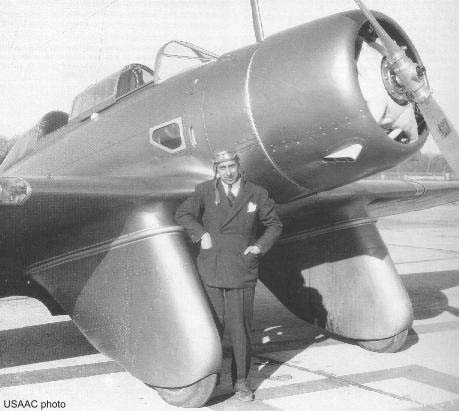
Design of a Supermarine aircraft first referred to (internally by Supermarine) as a ‘Spitfire’ began in 1931, but it wasn’t THE legendary Spitfire. It was the monoplane design Supermarine 224, designed to compete for fulfillment of Britain’s F.7/30 requirement. It looked like this:
The design above was not selected and the Gloster Gladiator won the design competition. If the 224 design had been selected, it would have been just as obsolete as the Gladiator was before WW2 even began.
It was in 1933 that R.J. Mitchell, the Spitfire’s designer, began radically revising (to the point of being completely different) his earlier drawings. Engine/cooling ideas and metal structure design insights from the earlier effort were brought forward, but the wing, landing gear and fuselage were all different. Supermarine evolved this design on their own until in December 194333 (typo), when the Air Ministry placed an order for Supermarine to build one prototype. A year later in December 1934, Mitchell decided to modify the plane design to accept what would become famous as the Rolls-Royce ‘Merlin’ Engine. With that decision, almost all the critical elements of what would become the original Spitfire, aka the Type 300, would be brought together.
By a very long stretch of the definition of when the design was ‘begun’ I suppose one could choose 1931, but that would require more stretching than would be required to say the Seversky P-35 was ‘begun’ when the SEV-3 design was first penned.
The use of 1931 is understandable only if the author had no knowledge of how the aircraft design came about and ignorance as to how Mitchell employed the ‘Type’ designation in the design documentation. It is NOT excusable to use 1931 to create a sham ‘parallel’ to a factoid concerning the F-35 in attempting to fabricate one-half of a faux cosmic ‘irony’ (the other half is the F-35 timeline addressed below). The Type 300 design was made real in what we know as the first Spitfire: the prototype ‘K5054’, built to meet special specification (F.37/34) and already incorporating aspects of an even more advanced specification being drafted at the time (F.10/35).
1940 Spitfire delivery rates 60 per week ….NOT!
The editorialist(s) obviously either don’t understand the difference between being contracted to deliver and actually delivering. Or maybe they didn’t even bother to read Wikipedia -- or if they did, they missed the important bits:
Bringing up the Spitfire rate of production is some particularly delicious irony. The editorialist’s whole point seems to be “Hey! Spitfires were produced on the QT, What’s wrong with the F-35?” It will be informative to run with this topic a little and note what the differences are between the Spitfire and F-35 production ramp ups as case studies.
I’m in the (very large) camp that believes that in general the delays happened for a combination of reasons, most fell under the responsibility of the contractor, some not. The project was enormous in scale and the contractor relatively small. Production demands required a large outsourcing of work that involved (for that time) advanced complex, and specialized skills, processes and materials. One source notes that expeditiously redrawn engineering source drawings for subcontractors at first induced and then promoted the proliferation of errors. Coordination of the logistics to ensure materials were where they were needed and when they were needed was a task beyond the original contractor management team’s ability. In any case, it took the earnest efforts of both industry and government to get the initial order of 310 Spitfires fulfilled in time to make them available for the looming war.
Spitfire Schedule Slippage and Overruns
The contract for the first 310 aircraft would in the end deliver a few numbers shy of that figure about 8 ½ months (~30%) behind schedule and at higher unit cost (~18-19%). Given the scale of the project and then-advanced construction and metal-working methods involved, this was still a remarkable achievement. As noted above, the ‘shadow factory’ at Bromwich was also late coming on line producing (at first) the evolved Spitfire Mark IIs. Do we need to wonder why the Aesop of Edmonton didn’t mention the cost overrun-late schedule part of the early Spitfire history? There are only two reasons possible, ignorance (by far the most likely) and convenience: either one is pathetically unprofessional in its own way. By ‘unprofessional’ however, I do not mean at all ‘unexpected’.
The F-35’s production rate increases have been delayed by ‘customer’ decisions based upon a variety of reasons asserted (valid or not). The F-35’s contractors have consistently sought to ramp up production as rapidly as possible. Contrast the F-35 situation with that of the Spitfire’s, where the production ramp up was highly ‘encouraged’--without early success-- by the customer.
Spitfire Production Ends in 1948?
We’ll allow the claim that the Spitfire was in production through 1948, but qualification and clarification is required concerning the ‘relevance’ of production after 1945.
The editorialist is apparently omitting the Seafire variant of the theme based upon the use of the ‘slightly more than 20000’ production claim (Seafire production ended in early 1949). If so, then the last of the Mk22/24 Spitfires rolled off the assembly line ‘barely’ in 1948 - on February 24th. However, production between 1945 and 1948 served to keep the industrial base intact more than anything else until Supermarine’s (1944) jet project could get going.
From what I can extract from the records found in Spitfire: The History (pp486-482), there were ~204 Mk 22/24s built between April 1946 until the end of production 22 months later representing about 1% of the Spitfires built. This means the postwar average weekly production was about 90% lower than even the lowest production rate seen in 1940 (shown above). Between 1945 and 1948, the RAF was disposing/selling-off Spitfires due to obsolescence faster than they were being built. This meant many of the post 1945 aircraft never even saw service with the UK or any of the other Commonwealth countries. For example, one Spitfire (PK713) built in 1946 was flown once, modified once, and then put in storage until it was sold for scrap in 1956. It was not alone in this fate. Touting production run length is fine, as long as we realize the relevance of the statistic. In this case, I’d say it was ‘not much’.
A Spitfire ‘Costs’ WHAT in today's terms?
Try about $ 4.5 Million US…EACH
The assertion that £12,600 in 1939 is “roughly $850,000 in today's terms” is a curious one, as I can find no reliable inflation adjustment/currency conversion combination (US or CDN) and proper approach that comes any closer to than those figures shown in the table that follows, but simply the order of magnitude of the claim indicates the editorialist(s) committed a classic mistake made by non-professionals: They used the wrong calculation (probably CPI/ ‘Basket of Goods’).
For the purposes of this comparison, using the “GDP Share” calculation approach IS appropriate, and for the same reasons that we speak of defense spending in general in terms of GDP percentages. We are interested in how important the Spitfire and F-35 is/are relative to the country economies involved. As noted at the excellent resource MeasuringWorth.com:
**The engine and airframe costs alone for the last Spitfires were ~30% higher than the earliest models. Add to that the increased complexity of the control systems as higher speed models required power boosting and there was a lot more ‘content’ and cost in the last Spitfires.
Using the above 2010 GDP Share value and the June 2010 UK-US exchange rate of 1 = 1.4566 we get the USD value of $4,526,916 in June 2010 dollars.
I submit, that given the relative differences in actual and expected effective operational life expectancy as well as actual technical content and capabilities embodied within both weapon systems, and even if using the highest projected F-35 unit cost estimates, that the F-35 is easily “worth” the difference.
Now, about that ‘total cost’ for the Spitfire... “$17-$20 billion”?
They obviously got the lower number by simply multiplying the 20,000 Spitfires times their incorrectly applied inflation adjusted number of $850,000 (20,000 x $850,000 = $17B) . The correct low number of the range in today’s dollars using the appropriate calculations is ~$90.54B! Would it be putting too fine a point on things for me to note that the Edmonton’s estimate is only about*** ‘82% off’ on the LOW side?
***I’m using the ‘about’ and approximate numbers because it is not at all clear whether the Journal is speaking of Canadian or US dollars but either one would yield roughly the same magnitude.
Edmonton Journal: Spitfire Apples < F-35 Oranges
The second Cardinal Sin in the Edmonton Journal’s cost accounting has to be what occurs when they then compare the under-estimated Spitfire ‘costs’ with the improper AND inflated (not to mention estimated and not yet ‘true’)“$325B” figure claimed as being the F-35 ‘cost’. The $325B number that is bandied about comes from the Air Force (see here) and Navy (pgs 129 & 143) Feb 2012 budget books (see USAF and USN ‘P-40’ Exhibits). Phrasing the assertion “cost to the U.S. alone is already estimated at $325 billion” carries the implication that there is some consensus on the basis for the ‘estimate’--there isn’t—but also leads one to believe the same accounting basis applies to the F-35 numbers as to the Spitfire’s when it doesn’t. The $325B ‘estimate’ includes ALL F-35 costs. The Spitfire’s numbers do not, and there is no way I am aware of to recreate what the missing Spitfire costs actually were. But we can get an idea from observing that the Castle Bromwich factory cost the British government £7M to put in place (BTW: Interesting article used as the source of the £7M figure) . Converting that number from 1939 currency to 2010 and we find it was the equivalent to £1.7B, or (using the June 2010 exchange rate as above) about $2.5B US just to build the factory that built just over half of all Spitfires. What other ‘Billions’ in Spitfire costs are unaccounted for?
The Edmonton Journal’s ‘17 Year’ Straw man Fails in the F-35’s Case As Well
As we have shown that the Spitfire went fewer than 17 years between fielding and production end/obsolescence, so too it can be shown that the F-35 has not been in development for ‘17 years’. No doubt the Journal used the start date of the award to Boeing and Lockheed to build the X-32 and X-35 Technology Demonstrators in late 1996. Unlike the generation-earlier Lightweight Fighter Competition that produced the YF-16 and YF-17, prototypes for what would become the F-16A/B and F/A-18A/B, the X-32 and X-35 were pursued to ensure the critical technologies were sufficiently matured prior to the pursuit of the actual combat aircraft program. That the X-35 demonstrated greater technical maturity was the key to Lockheed Martin being selected to build the F-35. That the X-32’s technology was NOT as mature, to the point that Boeing discovered in the building and flying of the X-32 that their fundamental manufacturing processes and aircraft design would have to be radically changed if their technology was to be subsequently fielded in a combat aircraft, illustrates the reasons for the X-plane designations for both aircraft far better than the X-35 basic design that did not need such radical changes.
The award of the contract to design and build the F-35 in SDD marks the proper start date to use in defining the F-35 timeline for comparison to the Spitfire. That start date was October 26, 2001, when the SDD contracts were awarded to Lockheed and Pratt and Whitney. For the mathematically challenged in journalism, that was about 10.5 years and not 17 years ago.
Additional Data: Preliminary Design Review (PDR) for the F-35 program was in April of 2003, and the Critical Design Reviews (CDRs) were held for the F-35A and F-35B were in February 2006. Given the configuration changes between the first aircraft assembled and the post-weight reduction aircraft and the timing of the design reviews, this makes AA-1 (the first F-35A to fly in December of 2006) a de facto ‘prototype’.
Finally
“And it helped win a world war in the meantime”…
That snarky little throwaway line is precious. As noted above, the editorialist(s) selectively sidestepped the reasons the Spitfire was in the position it was to be developed and produced for a very long time (in the WW2 sense). It’s longevity, and rightful place in history is owed to the twin facts of:
Now I ask the reader: If there was a global conflagration expected in the next 24 months, would there be any doubt that we would be pushing the F-35s into the hands of the aircrews in a manner similar to Britain in the run up to WWII?
No.
Begging once again the question: Who the f#@* believes what is in the papers anymore?
![]() |
| My Spitfire |
I almost passed on dissecting and documenting the Edmonton Journal’s drivel.. except, well… it’s just such a perfect example of the kind of pap the media pushes out in the public eye on technology topics in general and defense topics in particular. Mea Culpa I guess – I’m compelled to mentally capture the moment whenever the press just ‘phones it in’. Add to the mix a rushing-in to do so for the promotion of an obvious agenda either expecting or hoping no one will notice before the news cycle turns over? Well that just begs a smackdown.
I’m tempted to ‘begin at the beginning’ and do a complete ‘Fisking’ through to the end while disassembling this execrable output from the ‘Anemic Anonymous Aesop(s) of Edmonton’, but that would require me to put FAR more work into the effort of shaming the perpetrator(s) than I’m willing to, or have time to, put into the effort – and obviously many times more effort than they put into the original fable to begin with. Instead I’ve organized this simple, but lengthy critique to eviscerate the editorial’s lynchpin assertions.
The Edmonton Journal Describes a “Spitfire That Never Was”
In an effort to frame his analogy between the Supermarine Spitfire and the F-35 Joint Strike Fighter, the (understandably) unnamed ‘editorialist(s)’ asserts more than a few ‘facts’ concerning the Spitfire that aren’t facts at all. Begin with this paragraph (emphasis mine):
Consider the history of the Second World War's Spitfire. Design began in 1931, an initial contract for 310 was issued by the British government in 1936, the first prototype flew the same years, by 1940 they were rolling off the line at one factory at a rate of almost 60 planes a week, and in 1948 - slightly more than 20,000 aircraft of various version having been produced - the Spitfire went out of production. Price varied, of course, but in 1939 one contract put the sticker at £12,600, or roughly $850,000 in today's terms.
Think about that: in 17 years the Spitfire went from birth to out of production, for a total cost in the range of $17-$20 billion. And it helped win a world war in the meantime.
Compare that with the F-35. As it happens, 17 years has already passed since the first development contract was signed, the cost to the U.S. alone is already estimated at $325 billion,...We’ll take on the highlighted claims in order. Some of them are fabrications, some are worse: half-truths and over simplifications presented without sufficient information to attain a proper perspective. Collectively, the above passage highlights how the entire editorial is factually poor, analytically weak, and analogically inept.
Design of the Spitfire Began in 1933, NOT 1931
Design of a Supermarine aircraft first referred to (internally by Supermarine) as a ‘Spitfire’ began in 1931, but it wasn’t THE legendary Spitfire. It was the monoplane design Supermarine 224, designed to compete for fulfillment of Britain’s F.7/30 requirement. It looked like this:
![]() |
| Supermarine Type 224 |
![]() |
| The First Spitfire: Type 300 (Prototype K5054) |
It was in 1933 that R.J. Mitchell, the Spitfire’s designer, began radically revising (to the point of being completely different) his earlier drawings. Engine/cooling ideas and metal structure design insights from the earlier effort were brought forward, but the wing, landing gear and fuselage were all different. Supermarine evolved this design on their own until in December 19
![]() |
| Seversky SEV-3 |
![]() |
| Seversky P-35 |
The use of 1931 is understandable only if the author had no knowledge of how the aircraft design came about and ignorance as to how Mitchell employed the ‘Type’ designation in the design documentation. It is NOT excusable to use 1931 to create a sham ‘parallel’ to a factoid concerning the F-35 in attempting to fabricate one-half of a faux cosmic ‘irony’ (the other half is the F-35 timeline addressed below). The Type 300 design was made real in what we know as the first Spitfire: the prototype ‘K5054’, built to meet special specification (F.37/34) and already incorporating aspects of an even more advanced specification being drafted at the time (F.10/35).
1940 Spitfire delivery rates 60 per week ….NOT!
The editorialist(s) obviously either don’t understand the difference between being contracted to deliver and actually delivering. Or maybe they didn’t even bother to read Wikipedia -- or if they did, they missed the important bits:
By May 1940, Castle Bromwich had not yet built its first Spitfire, in spite of promises that the factory would be producing 60 per week starting in April. On 17 May Lord Beaverbrook, Minister of Aircraft Production, telephoned Lord Nuffield and manoeuvered him into handing over control of the Castle Bromwich plant to Beaverbook's Ministry. Beaverbrook immediately sent in experienced management staff and experienced workers from Supermarine and gave over control of the factory to Vickers-Armstrong. Although it would take some time to resolve the problems, in June 1940, 10 Mk IIs were built; 23 rolled out in July, 37 in August, and 56 in September.Castle Bromwich eventually would produce the overwhelming majority of Spitfires compared to any other site, but in 1940 it was still getting up to speed. Including production at the original facilities, the highest average weekly production rate of production seen in 1940 came in November:
Bringing up the Spitfire rate of production is some particularly delicious irony. The editorialist’s whole point seems to be “Hey! Spitfires were produced on the QT, What’s wrong with the F-35?” It will be informative to run with this topic a little and note what the differences are between the Spitfire and F-35 production ramp ups as case studies.
I’m in the (very large) camp that believes that in general the delays happened for a combination of reasons, most fell under the responsibility of the contractor, some not. The project was enormous in scale and the contractor relatively small. Production demands required a large outsourcing of work that involved (for that time) advanced complex, and specialized skills, processes and materials. One source notes that expeditiously redrawn engineering source drawings for subcontractors at first induced and then promoted the proliferation of errors. Coordination of the logistics to ensure materials were where they were needed and when they were needed was a task beyond the original contractor management team’s ability. In any case, it took the earnest efforts of both industry and government to get the initial order of 310 Spitfires fulfilled in time to make them available for the looming war.
Spitfire Schedule Slippage and Overruns
The contract for the first 310 aircraft would in the end deliver a few numbers shy of that figure about 8 ½ months (~30%) behind schedule and at higher unit cost (~18-19%). Given the scale of the project and then-advanced construction and metal-working methods involved, this was still a remarkable achievement. As noted above, the ‘shadow factory’ at Bromwich was also late coming on line producing (at first) the evolved Spitfire Mark IIs. Do we need to wonder why the Aesop of Edmonton didn’t mention the cost overrun-late schedule part of the early Spitfire history? There are only two reasons possible, ignorance (by far the most likely) and convenience: either one is pathetically unprofessional in its own way. By ‘unprofessional’ however, I do not mean at all ‘unexpected’.
The F-35’s production rate increases have been delayed by ‘customer’ decisions based upon a variety of reasons asserted (valid or not). The F-35’s contractors have consistently sought to ramp up production as rapidly as possible. Contrast the F-35 situation with that of the Spitfire’s, where the production ramp up was highly ‘encouraged’--without early success-- by the customer.
Spitfire Production Ends in 1948?
We’ll allow the claim that the Spitfire was in production through 1948, but qualification and clarification is required concerning the ‘relevance’ of production after 1945.
The editorialist is apparently omitting the Seafire variant of the theme based upon the use of the ‘slightly more than 20000’ production claim (Seafire production ended in early 1949). If so, then the last of the Mk22/24 Spitfires rolled off the assembly line ‘barely’ in 1948 - on February 24th. However, production between 1945 and 1948 served to keep the industrial base intact more than anything else until Supermarine’s (1944) jet project could get going.
From what I can extract from the records found in Spitfire: The History (pp486-482), there were ~204 Mk 22/24s built between April 1946 until the end of production 22 months later representing about 1% of the Spitfires built. This means the postwar average weekly production was about 90% lower than even the lowest production rate seen in 1940 (shown above). Between 1945 and 1948, the RAF was disposing/selling-off Spitfires due to obsolescence faster than they were being built. This meant many of the post 1945 aircraft never even saw service with the UK or any of the other Commonwealth countries. For example, one Spitfire (PK713) built in 1946 was flown once, modified once, and then put in storage until it was sold for scrap in 1956. It was not alone in this fate. Touting production run length is fine, as long as we realize the relevance of the statistic. In this case, I’d say it was ‘not much’.
A Spitfire ‘Costs’ WHAT in today's terms?
Try about $ 4.5 Million US…EACH
The assertion that £12,600 in 1939 is “roughly $850,000 in today's terms” is a curious one, as I can find no reliable inflation adjustment/currency conversion combination (US or CDN) and proper approach that comes any closer to than those figures shown in the table that follows, but simply the order of magnitude of the claim indicates the editorialist(s) committed a classic mistake made by non-professionals: They used the wrong calculation (probably CPI/ ‘Basket of Goods’).
![]() |
| 1939-Present CPI Value Adjustment |
In the past less material and labor existed that could be applied to all projects. So to measure the importance of this project (compares to other projects) use the share of GDP indicator.Measuring Worth follows up with a good example of the point made:
In 1931, the Empire State building, a giant of a structure in its day, was built at a cost of $41 million. This may seem inexpensive in today's terms when we compare its cost using the GDP deflator and determine a contemporary cost of $491 million. As a share of the economy, however, an amount of $7.6 billion in 2009 dollars would be the number to use, showing how important this building was in its day.If we’re trying to understand how economically important the Spitfire was in the economy of 1939 and compare that to the same for the F-35 today, and using the VERY** conservative figure of £12,600 (in 1939) the Spitfire would cost £3,110,000.00 in 2010 (latest year data available at Measuring Worth).
**The engine and airframe costs alone for the last Spitfires were ~30% higher than the earliest models. Add to that the increased complexity of the control systems as higher speed models required power boosting and there was a lot more ‘content’ and cost in the last Spitfires.
![]() |
| Last of the Spitfires: The Mk24 |
![]() |
| 1939-Present GDP Share Value Adjustment |
Now, about that ‘total cost’ for the Spitfire... “$17-$20 billion”?
They obviously got the lower number by simply multiplying the 20,000 Spitfires times their incorrectly applied inflation adjusted number of $850,000 (20,000 x $850,000 = $17B) . The correct low number of the range in today’s dollars using the appropriate calculations is ~$90.54B! Would it be putting too fine a point on things for me to note that the Edmonton’s estimate is only about*** ‘82% off’ on the LOW side?
***I’m using the ‘about’ and approximate numbers because it is not at all clear whether the Journal is speaking of Canadian or US dollars but either one would yield roughly the same magnitude.
Edmonton Journal: Spitfire Apples < F-35 Oranges
The second Cardinal Sin in the Edmonton Journal’s cost accounting has to be what occurs when they then compare the under-estimated Spitfire ‘costs’ with the improper AND inflated (not to mention estimated and not yet ‘true’)“$325B” figure claimed as being the F-35 ‘cost’. The $325B number that is bandied about comes from the Air Force (see here) and Navy (pgs 129 & 143) Feb 2012 budget books (see USAF and USN ‘P-40’ Exhibits). Phrasing the assertion “cost to the U.S. alone is already estimated at $325 billion” carries the implication that there is some consensus on the basis for the ‘estimate’--there isn’t—but also leads one to believe the same accounting basis applies to the F-35 numbers as to the Spitfire’s when it doesn’t. The $325B ‘estimate’ includes ALL F-35 costs. The Spitfire’s numbers do not, and there is no way I am aware of to recreate what the missing Spitfire costs actually were. But we can get an idea from observing that the Castle Bromwich factory cost the British government £7M to put in place (BTW: Interesting article used as the source of the £7M figure) . Converting that number from 1939 currency to 2010 and we find it was the equivalent to £1.7B, or (using the June 2010 exchange rate as above) about $2.5B US just to build the factory that built just over half of all Spitfires. What other ‘Billions’ in Spitfire costs are unaccounted for?
The Edmonton Journal’s ‘17 Year’ Straw man Fails in the F-35’s Case As Well
As we have shown that the Spitfire went fewer than 17 years between fielding and production end/obsolescence, so too it can be shown that the F-35 has not been in development for ‘17 years’. No doubt the Journal used the start date of the award to Boeing and Lockheed to build the X-32 and X-35 Technology Demonstrators in late 1996. Unlike the generation-earlier Lightweight Fighter Competition that produced the YF-16 and YF-17, prototypes for what would become the F-16A/B and F/A-18A/B, the X-32 and X-35 were pursued to ensure the critical technologies were sufficiently matured prior to the pursuit of the actual combat aircraft program. That the X-35 demonstrated greater technical maturity was the key to Lockheed Martin being selected to build the F-35. That the X-32’s technology was NOT as mature, to the point that Boeing discovered in the building and flying of the X-32 that their fundamental manufacturing processes and aircraft design would have to be radically changed if their technology was to be subsequently fielded in a combat aircraft, illustrates the reasons for the X-plane designations for both aircraft far better than the X-35 basic design that did not need such radical changes.
The award of the contract to design and build the F-35 in SDD marks the proper start date to use in defining the F-35 timeline for comparison to the Spitfire. That start date was October 26, 2001, when the SDD contracts were awarded to Lockheed and Pratt and Whitney. For the mathematically challenged in journalism, that was about 10.5 years and not 17 years ago.
Additional Data: Preliminary Design Review (PDR) for the F-35 program was in April of 2003, and the Critical Design Reviews (CDRs) were held for the F-35A and F-35B were in February 2006. Given the configuration changes between the first aircraft assembled and the post-weight reduction aircraft and the timing of the design reviews, this makes AA-1 (the first F-35A to fly in December of 2006) a de facto ‘prototype’.
Finally
“And it helped win a world war in the meantime”…
That snarky little throwaway line is precious. As noted above, the editorialist(s) selectively sidestepped the reasons the Spitfire was in the position it was to be developed and produced for a very long time (in the WW2 sense). It’s longevity, and rightful place in history is owed to the twin facts of:
- The design was most suitable for adaptation to the changing battlespace (higher and faster as the war progressed)
- The urgency for planes was seen before the actual need materialized.
Now I ask the reader: If there was a global conflagration expected in the next 24 months, would there be any doubt that we would be pushing the F-35s into the hands of the aircrews in a manner similar to Britain in the run up to WWII?
No.
Sunday, March 25, 2012
Cost Cutting Via Retirement of CG-47 Class Cruisers
Or is it to advance the future of the fleet as well?
It was recently announced that the Navy would retire 7 cruisers of the Ticonderoga (CG-47) class. I'm not so certain this is bad news, depending on what outcome the Navy is playing for in their 'long-game'.
Since the retirement of the earlier generations of Navy cruisers, the biggest difference between destroyers and cruisers has been what the Navy has decided to stuff into their hulls. In fact, the the Ticonderoga was initially ordered as the DDG-47 Ticonderoga and the class used the same hull and ship systems as the Spruance class destroyers.
In rather rapid (in the shipbuilding sense) succession, the Navy:
The Zumwalt's have significantly more room in their hulls for new or additional systems, and more power available to run them. modular weaponization, and long range guided artillery for when you need it. IMHO, it would be almost be worth it alone just to tweak the noses of people who can't stand or fear the 'Tumblehome' hull design.
Update: Here's what the world's largest composite structure looks like:
One more technology hurdle down...
It was recently announced that the Navy would retire 7 cruisers of the Ticonderoga (CG-47) class. I'm not so certain this is bad news, depending on what outcome the Navy is playing for in their 'long-game'.
Since the retirement of the earlier generations of Navy cruisers, the biggest difference between destroyers and cruisers has been what the Navy has decided to stuff into their hulls. In fact, the the Ticonderoga was initially ordered as the DDG-47 Ticonderoga and the class used the same hull and ship systems as the Spruance class destroyers.
In rather rapid (in the shipbuilding sense) succession, the Navy:
1. Decided to extend the construction of the Arleigh Burke (DDG-51) series with another 'flight' of Arleigh Burkes in lieu of following up on and adding numbers to the DD-1000 Zumwalt class. This was allegedly more affordable path that touted the low cost of the DDG-51s while somehow not accounting for the additional costs and risks of the upgrades proposed for the new flight. The usual crowd applauded the move.
2. Admitted their shock and horror when they discovered the 'affordable' (but unacceptable without the planned upgrades) Arleigh Burkes were also unaffordable with the necessary upgrades. Oh and did we mention that keeping the older DDG-51s viable was going to cost quite a bit more or create 'gaps' as well?While during this time the DDG-1000 Zumwalt's seem to be doing just fine. Which seems to bring us right back to the idea of maybe a family of modern warships based upon the DD(X)'s original objectives isn't such a bad idea after all? Is the Navy angling towards an eventual CG-1000 or just slouching their way to greatness?
![]() |
| DD-1000 vs CG-51 Comparison In Profile |
Update: Here's what the world's largest composite structure looks like:
![]() |
| DDG-1000 Superstructure (HII Photo) |
Subscribe to:
Posts (Atom)